Choosing the best materials for pet travel bags is one of the earliest decisions a brand owner makes, and one of the hardest to walk back. It sets your durability, your shelf appeal, your landed cost, and how many warranty returns you field six months in. Elandmake has run this call thousands of times. We are a BSCI and SGS certified pet bag OEM manufacturer working since 2015, and we have produced millions of units across every major material type. Here is how the options actually compare in production.
At a Glance: Material Comparison
| Material | Strengths | Trade-off | Where it fits |
|---|---|---|---|
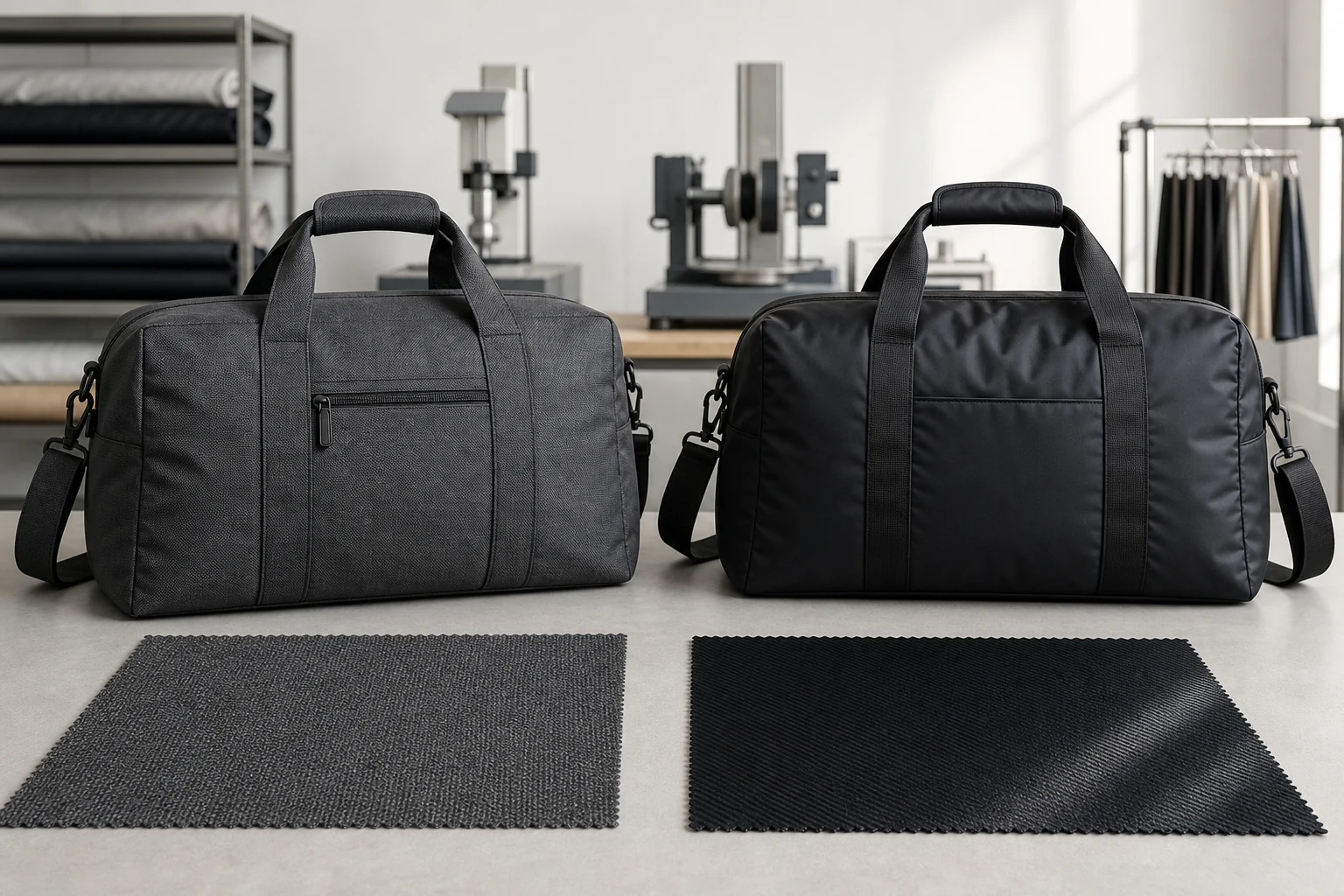
| Nylon (600D, 1680D) | Best abrasion resistance at a given denier; naturally water-resistant; lighter; strong claw resistance | Costs 15–25% more than polyester | $50–$120 premium band; the default for airline carriers |
| Polyester (600D, 900D) | Lower FOB price; good UV resistance so colour holds; hundreds of colours and textures | Heavier and less abrasion-resistant than nylon | $25–$55 band and Amazon FBA listings |
| Oxford cloth | Breathable and durable; takes dye well; ripstop weaves add tear resistance | Heavier than nylon | Budget-to-mid price points, ventilated designs |
| PU leather | Premium look and hand-feel; wipes clean | Not breathable; can crack in temperature extremes | Premium shelf pricing in cooler climates |
Spec the denier, not just the fabric name — 300D and 900D polyester behave nothing alike under load. MOQ 300 pieces, bulk lead time 15–30 days for light customization or 20–45 days for heavy customization.
Best Materials for Pet Travel Bags Explained: The Basics
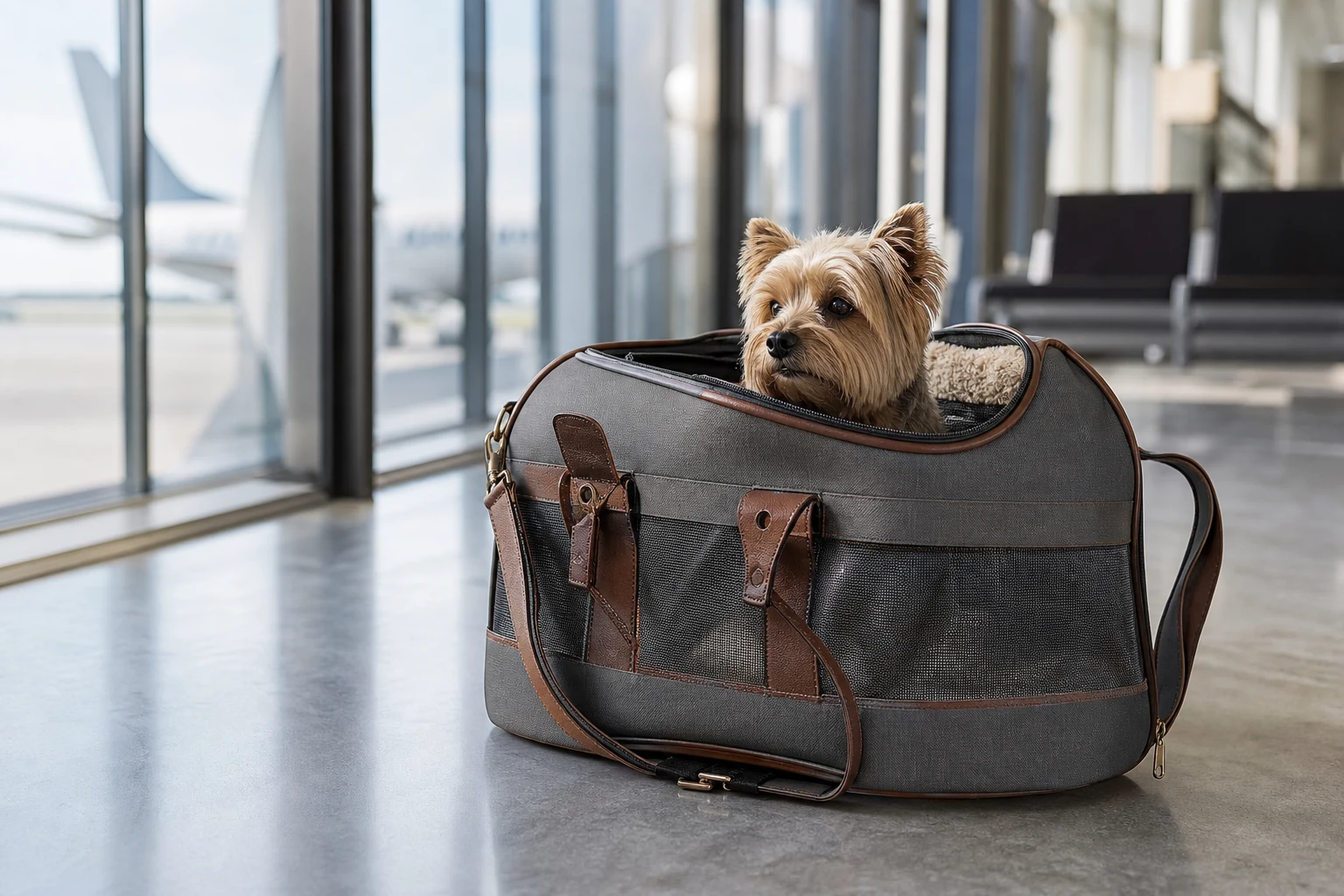
Pet travel bags take abuse that most bags never see: claws, saliva, water-bowl spills, frequent washing, UV in a car window, and thousands of zip cycles over the product's life. The best materials for pet travel bags have to survive all of it without the shell fraying or the coating peeling. The material set we settled on is what our custom pet travel backpack uses as standard.
The five materials we spec most often for pet bags are:
- Nylon (600D, 1680D)
- Polyester (600D, 900D)
- Oxford Cloth
- PU (Polyurethane) Leather
- Canvas
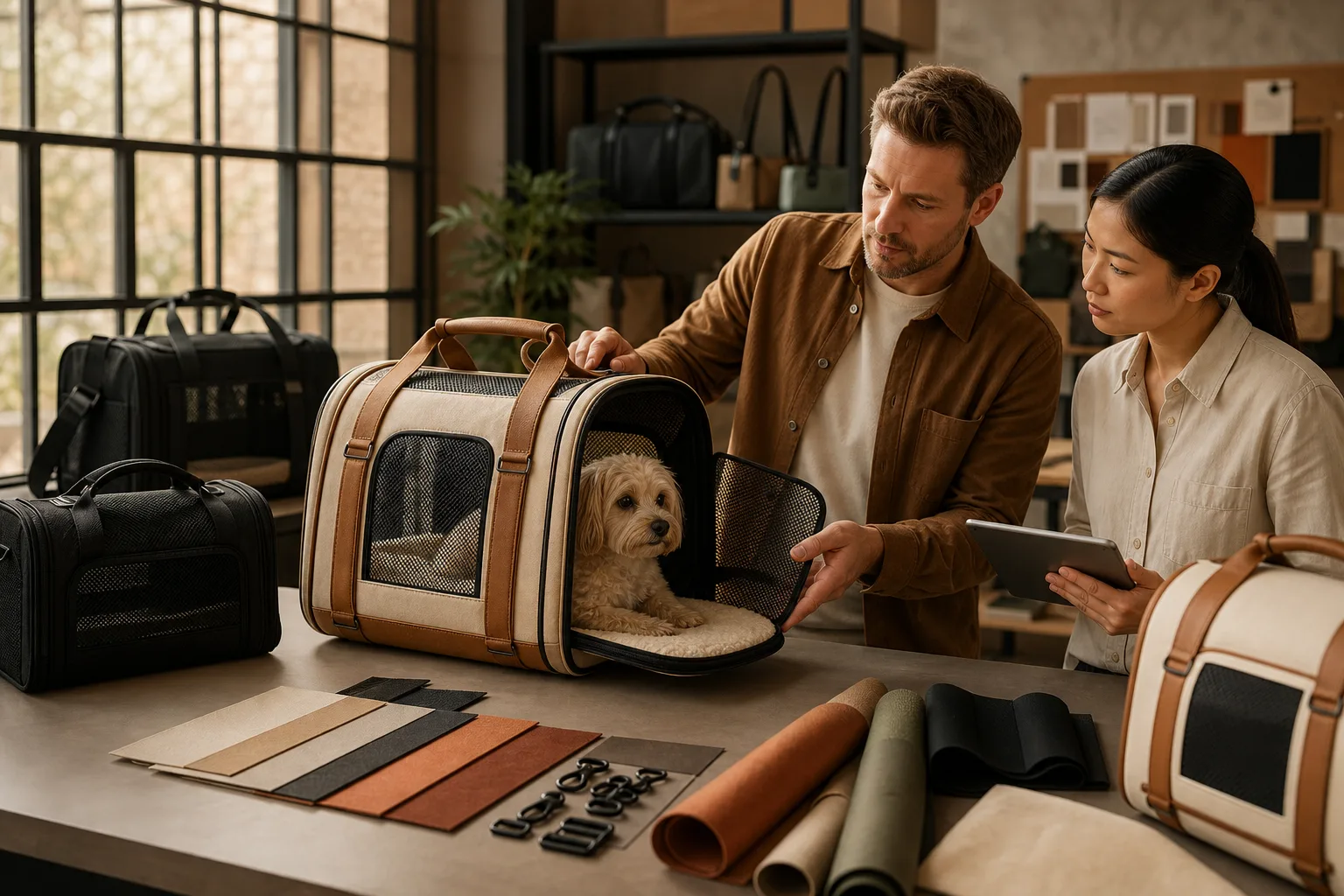
Each carries its own trade-off between weight, cost, toughness, and how the finished bag reads on a shelf. The right pick follows from your target retail price, how the bag gets used, and where your brand sits in the market. If you are still deciding between nylon and polyester specifically, our nylon vs polyester bag material comparison breaks down the denier-by-denier differences.
Key Factors When Sourcing the Best Materials for Pet Travel Bags
Before you compare fabrics, weigh the five performance dimensions that decide how a pet travel bag holds up:
- Tear Resistance — Can the fabric take pet claws and rough handling without laddering?
- Water Resistance — How well does it shed spills and rain?
- Weight — Lighter shells mean less fatigue for the owner carrying the pet
- Cleanability — Owners want a bag that wipes down or machine-washes
- Aesthetics & Finish — The look that earns the sale on a crowded shelf
Industry Standards & Compliance for Best Materials for Pet Travel Bags
In North American markets, materials in pet products have to clear several safety standards. The Consumer Product Safety Commission (CPSC) sets limits on harmful substances including lead, phthalates, and azo dyes in consumer goods, and pet accessories sold through major retailers and marketplaces fall under the same rules.
At Elandmake, all materials are SGS tested and REACH compliant. Our BSCI certification also covers ethical sourcing across our raw-material supplier network, which matters to buyers who audit their supply chain.
Key compliance checkpoints for pet bag materials:
- Azo dye-free fabrics for every color (EU REACH, CPSC)
- Lead-free hardware on buckles, zippers, and D-rings
- Non-toxic coatings on water-resistant finishes
- CA Prop 65 compliance for brands selling into California
Material & Quality Breakdown: Finding the Best Materials for Pet Travel Bags
🟦 Nylon (600D / 1680D)
Best for: Premium everyday carriers, airline-compliant bags, outdoor adventure packs
- Better abrasion resistance than polyester at the same denier
- Naturally water-resistant; handles rain and splashes
- Lighter than polyester at equivalent thickness
- Higher cost, typically 15–25% more than polyester
- Strong claw resistance, especially in 1680D ballistic nylon
Elandmake verdict: The pick for premium-tier pet travel bags in the $50–$120 retail band. Nylon is also the default for airline pet carrier work, where weight and tear strength both count.
🟩 Polyester (600D / 900D)
Best for: Mid-range backpacks and carriers, high-volume wholesale orders
- Cost-effective; a lower FOB price leaves room for competitive retail margins
- Good UV resistance, so color holds longer than nylon under sunlight
- Slightly heavier and less abrasion-resistant than nylon
- Available in hundreds of colors and textures
- Easy to clean; most variants are machine-washable
Elandmake verdict: Ideal for the $25–$55 retail band and Amazon FBA listings where cost per unit drives the buy box. MOQ starts at 300 pieces per style and colorway; production takes 15–30 days for light customization or 20–45 days for heavy customization. Sellers building a branded line often pair polyester shells with custom labeling; see our notes on private-label pet bags for Amazon sellers.
🟫 PU Leather
Best for: Lifestyle brands, boutique retail, fashion-forward collections
- Premium look and hand-feel; commands higher shelf prices
- Wipes clean with a damp cloth
- Not breathable, so it is a poor fit for warm climates or mesh-heavy designs
- Less durable over time; can crack in temperature extremes
- Available in textured, matte, or glossy finishes
Elandmake verdict: Suits brands aiming at $70–$150 retail. Do not run it as the primary material on a functional hiking or airline-compliant bag; pair it as an accent panel instead.
🟨 Oxford Cloth
Best for: Outdoor adventure packs, rugged utility carriers
- Breathable and durable, a good match for ventilated designs
- Takes dye well; vibrant colors hold over time
- Heavier than nylon, which adds to overall bag weight
- Very affordable, so it fits budget-to-mid price points
- Ripstop weaves add tear stopping without much weight penalty
⬜ Canvas
Best for: Eco-conscious brands, organic and natural positioning
- Strong brand story for sustainability-focused buyers
- Heavier than synthetics and needs a waterproof coating for real travel use
- Organic cotton canvas is available for premium eco branding
- Best treated with a specified DWR or laminate finish, not left raw
Common Mistakes When Ordering Pet Travel Bags by Material
Watch for these when you write the best materials for pet travel bags into an OEM tech pack:
- Choosing by fabric price alone — a cheaper shell often shows up later as a higher warranty return rate
- Ignoring the denier rating — 300D and 900D polyester behave nothing alike under load, so spec the number, not just "polyester"
- Forgetting mesh panels — ventilation material matters as much as the shell; always call out the mesh type
- Leaving coatings unspecified — water-resistant PU coating has to be written in; not every fabric ships pre-coated
- Skipping the SGS test — this is the one buyers on major marketplaces and retail programs ask for first
- Overlooking zipper and hardware grade — a 1680D shell on a weak zipper still fails at the seam; spec YKK or an equivalent tested chain
Finding the Right OEM Partner for Best Materials for Pet Travel Bags
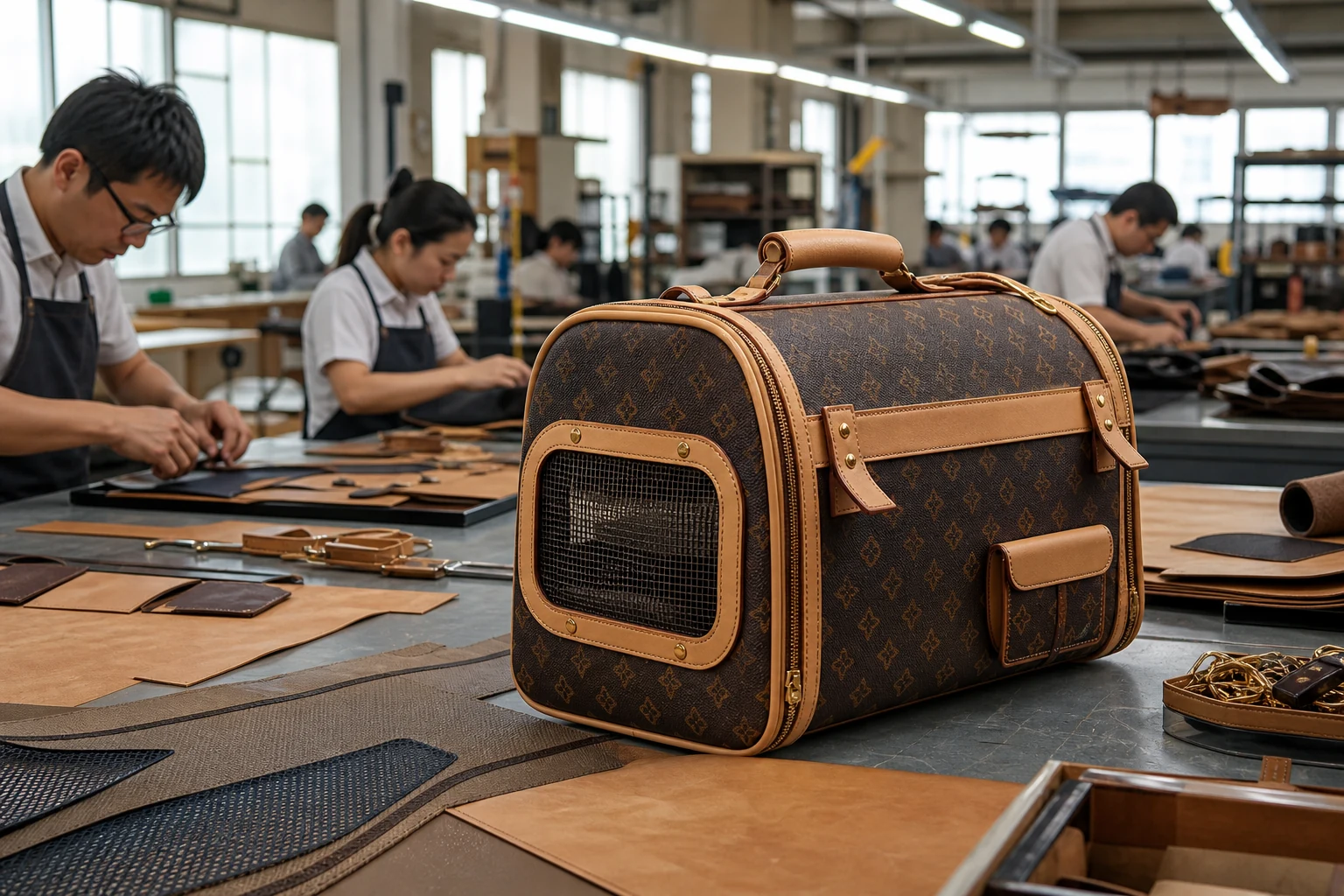
The best materials for pet travel bags only perform as well as the factory that cuts and sews them. At Elandmake, you get:
- 10+ years of OEM/ODM manufacturing (founded 2015)
- MOQ: 300 pieces per style
- Sample lead time: 3–7 business days
- Bulk production: 15–30 days for light customization or 20–45 days for heavy customization
- BSCI and SGS certified factory
- In-house QC with AQL inspection and full material testing and documentation
For buyers planning a larger program, our guide to custom travel bag wholesale at MOQ 300 walks through order structuring and lead times. Explore our custom pet backpack range to see how each material performs in real production, or browse our dog outing bag collection for material applications across product types.
Ready to source your custom pet travel bag?
Contact Elandmake for a free factory quote
— our team responds within 24 hours.