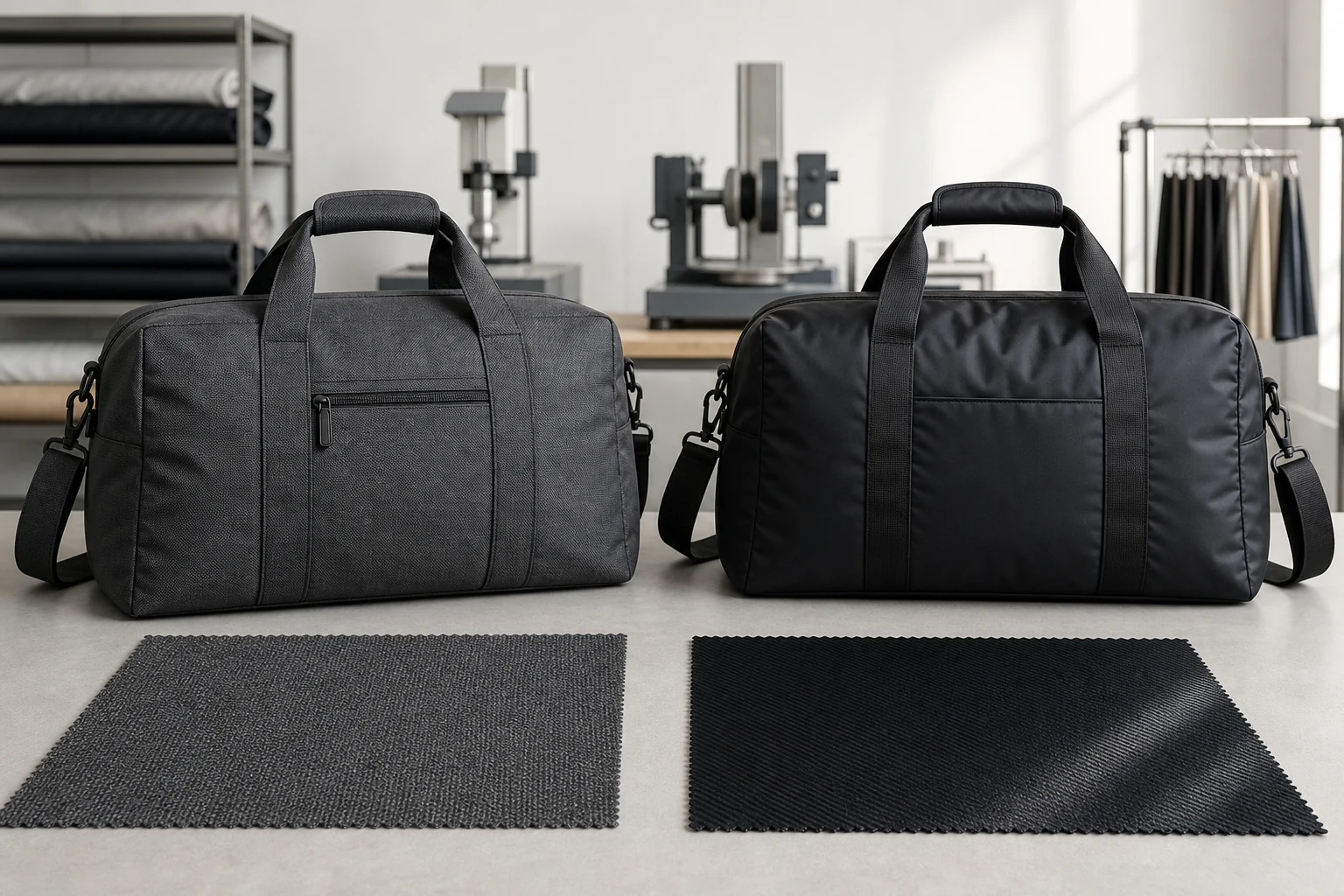
At the same denier nylon outperforms polyester on tear and abrasion resistance, which is why it dominates technical and outdoor bags - but it costs more and is less stable under prolonged UV. Polyester in 600D or 900D is tough enough for daily carry, holds printed colour better and lands at a lower unit price. Choose polyester for price-sensitive retail and promotional lines, nylon where the product must survive real abuse.
Fabric choice sets the tone for a whole custom bag program. It drives durability, the look on shelf, the retail price you can defend, and how the product holds up once it ships. For B2B buyers choosing between nylon and polyester, small spec differences add up fast. The wrong call shows up months later as returns and one-star reviews; the right one keeps reorders coming.
At Elandmake we have 10+ years making bags in Nylon, Polyester, Oxford cloth, PU leather, and canvas. We hold BSCI and SGS certifications and work with North American brands to balance cost against performance. Here is how the two dominant synthetics actually differ once you put them into production.
At a Glance: Nylon vs Polyester
| Nylon | Polyester | |
|---|---|---|
| Tear & abrasion at same denier | Higher — 600D nylon beats 600D polyester | Lower at equal weight |
| Elasticity | Slightly elastic, absorbs shock | Stiffer, holds structure |
| Water & drying | Absorbs more when untreated | Absorbs far less, dries faster |
| UV & colour fastness | Fades sooner in constant sun | Dye held deep in fibre, UV-stable |
| Typical denier range | 420D–1000D (incl. Cordura) | 600D–900D |
| Unit cost | Higher | Lower — usually wins on price |
| Best fit | Tactical packs, premium luggage, gear carriers | High-volume retail, promotional, bright colourways |
Both are available at MOQ 300 pieces per design, with samples in 3–7 days.
How Nylon and Polyester Actually Behave in a Bag
Both fabrics are synthetic polymers, but they behave differently once they are cut, sewn, and loaded. The first number to check is the strength-to-weight ratio. Nylon started life as a silk substitute. It is strong, slightly elastic, and holds up well against abrasion, and that bit of stretch lets it absorb a drop or a sharp load without tearing.
Polyester is stiffer and less elastic. It absorbs far less water than untreated nylon, so it dries quicker, and it takes dye deep into the fiber, which makes it resistant to UV fading. For a bag that sits in direct sun day after day, polyester keeps its color and shape longer. Nylon in the same conditions can gray out and soften at the surface over time.
Denier and Durability: Why 600D Nylon Beats 600D Polyester
Denier (D) measures yarn thickness. A higher denier means heavier, thicker cloth, but denier alone does not tell the whole story: 600D nylon outperforms 600D polyester on tear and abrasion at the same weight. Match the fiber and the denier to the job.
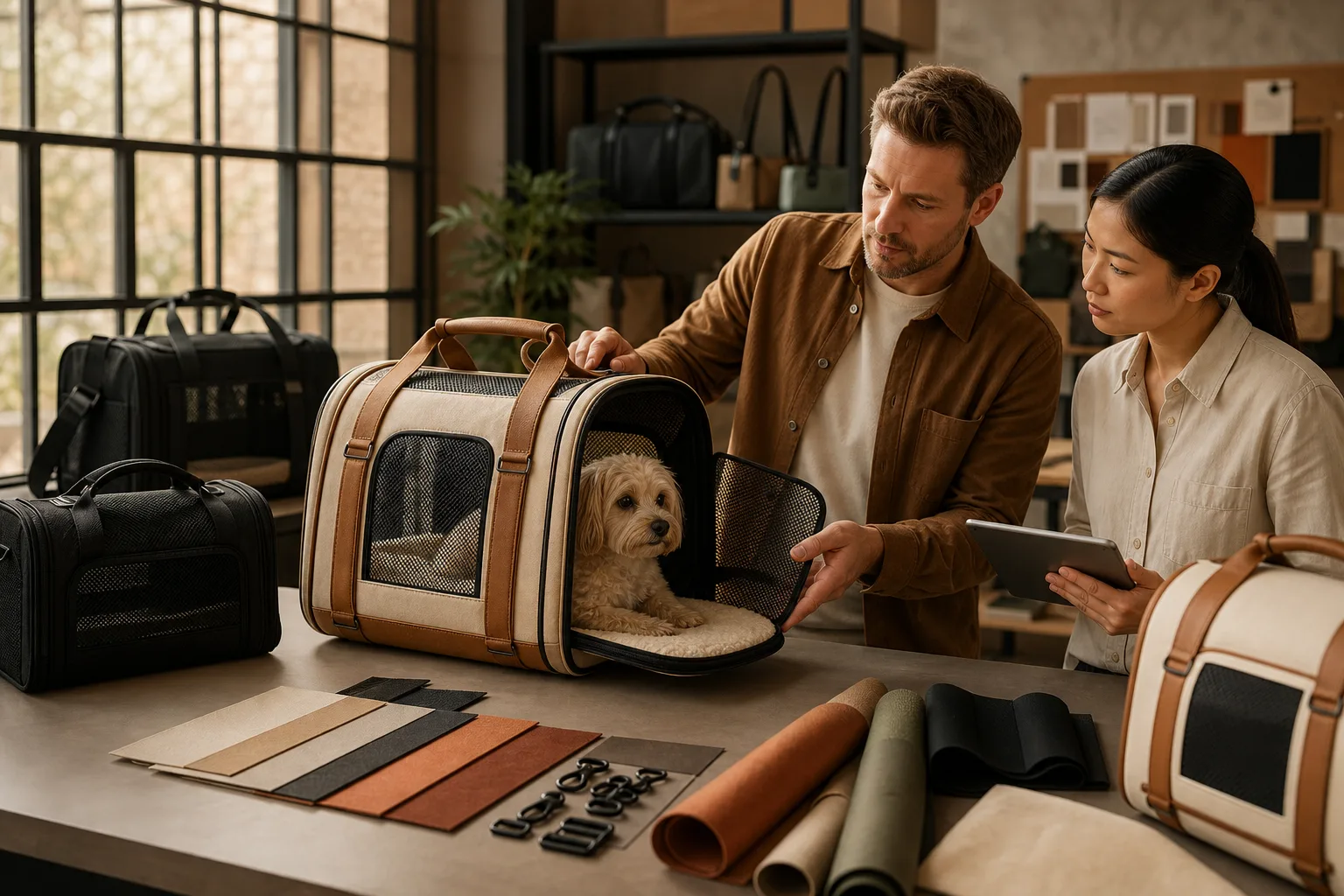
- Nylon (420D up to 1000D Cordura): built for high-stress use. Tactical packs, premium luggage, laptop and gear carriers, and heavy-duty custom dog backpack wholesale products where a torn seam is a safety problem, not a cosmetic one.
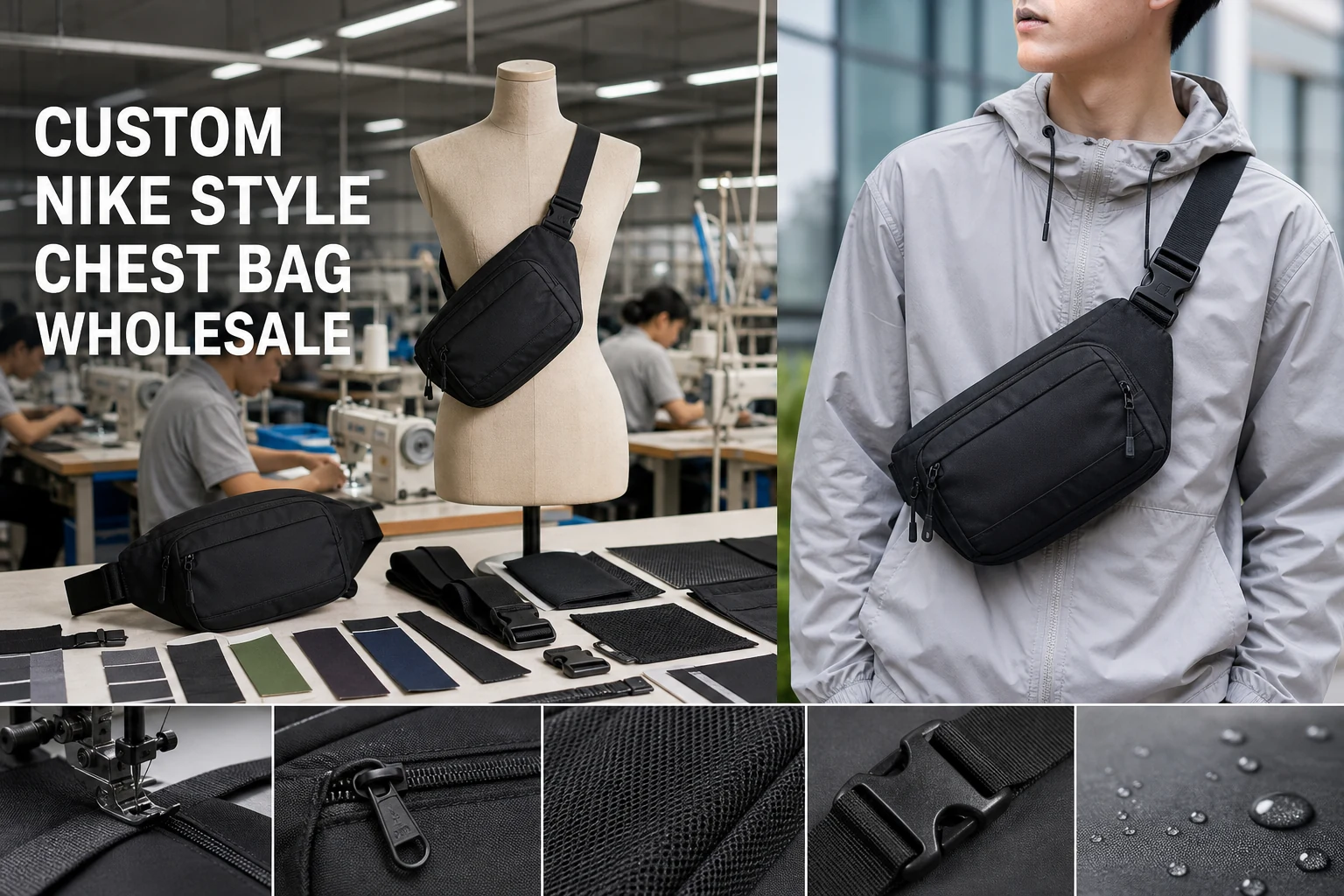
- Polyester (600D, 900D): cost-effective and tough enough for daily carry. School packs, promotional totes, cosmetic pouches, and structured everyday bags like a custom running sports bag.
Hardware matters as much as the shell. We spec YKK zippers, bar-tacked stress points, and reinforced bases so the weak spot is never the trim. Our engineers can add a PU (polyurethane) or PEVA backing to either fabric to make it water-resistant, and we build to CPSC textile compliance guidelines for the North American market.
Cost: Why Polyester Usually Wins on Price
Budget is real on every OEM project. Put the two fabrics side by side and polyester almost always wins on price. Its production is less resource-hungry, which makes it the default for high-volume, mid-tier retail where margin per unit decides whether a program works.
Nylon costs more. It raises your unit price, but it lets you position a product in the premium or utility segment where buyers expect and pay for that feel. Our MOQ starts at 300 pieces, so you can trial a premium nylon build without locking up capital, and our 3–7 day sample turnaround lets you handle the real material before you commit. If you are building a house brand, our private-label bag manufacturing options cover custom logos, linings, zipper pulls, and retail-ready or FBA-ready packaging.
Which Is Better for a Backpack, Nylon or Polyester?
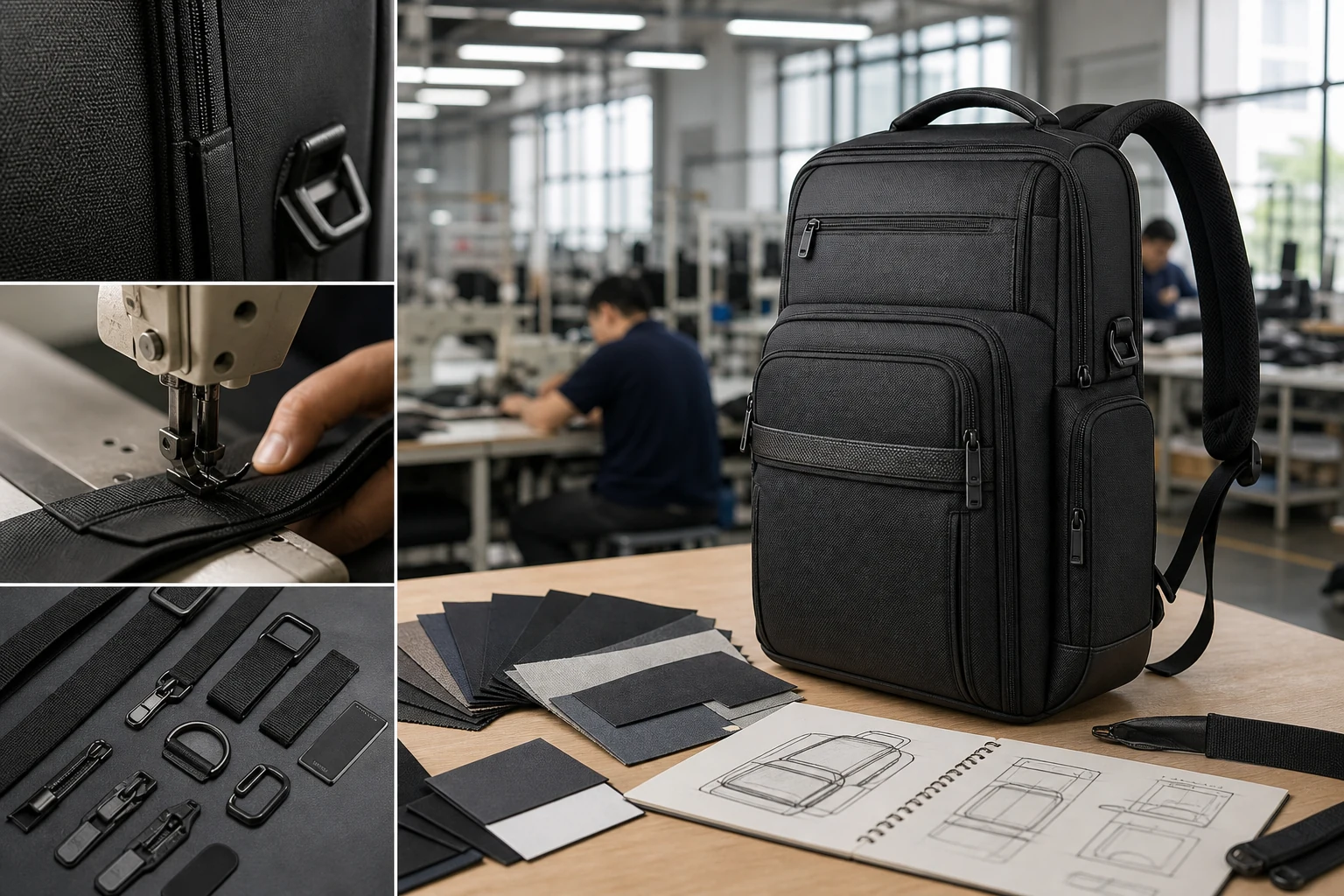
For a backpack, the answer follows the load and the life of the product. A backpack concentrates stress in three places — the shoulder-strap anchors, the base, and the panel that drags against a desk, a locker or a car floor. Nylon's slight elasticity lets those points absorb a shock load instead of tearing at the stitch line, which is why 1000D nylon and Cordura end up on tactical, outdoor and business packs that carry a laptop every day.
Polyester is the better buy for a school or promotional pack. It is stiffer, so a structured silhouette keeps its shape on a shelf without heavy interlining, and its dye sits deep in the fibre, so a bright colourway survives a season of sun on a playground without graying out. At 600D it is tough enough for daily carry; the failure point in that price band is almost never the shell.
If your pack has to do both — survive abrasion and hold a bright brand colour — the usual answer is a mix: nylon on the base and strap anchors, polyester on the body panels.
Nylon or Polyester for Luggage?
Luggage is the case where polyester's UV stability matters most. A suitcase spends its life on tarmacs, roof racks and carousels, and a polyester shell keeps its colour through that far longer than an untreated nylon one, which fades sooner in constant sun.
Nylon still wins for premium luggage, where the buyer is paying for abrasion resistance and the hand-feel of a high-denier weave. The trade-off is water: untreated nylon absorbs more and dries slower, so a nylon case aimed at wet climates wants a PU or PEVA backing, which we can add to either fabric.
Common Questions
Is nylon a good material for bags?
Yes, nylon is a good bag material wherever abrasion resistance matters more than cost. At the same denier it beats polyester on tear and abrasion — 600D nylon outperforms 600D polyester — and its slight elasticity helps it absorb a sharp load rather than split. Its weaknesses are price, UV fading in constant sun, and water absorption when it is left untreated.
Is polyester good for bags?
Yes, and it is the default for high-volume retail for good reasons: it costs less, it dries faster because it absorbs far less water, and it holds dye deep in the fibre, so bright colourways stay bright. It is stiffer than nylon, which helps a structured bag keep its shape. What you give up is tear and abrasion resistance at the same denier.
What is a nylon bag?
A nylon bag is one whose shell fabric is woven from nylon, a synthetic polymer originally developed as a silk substitute. In bag production it is specified by denier — commonly 420D to 1000D, with Cordura at the high end — and it is chosen when the product has to survive abrasion and shock loads.
Which Material Should You Choose?
There is no bad fabric here, only the wrong fabric for the use case. If your brand lives on abrasion resistance, high-end positioning, and durability under load, nylon wins. If you need bright, UV-stable color, structural stiffness, and the best cost per unit, polyester is the smarter buy. For plenty of programs the answer is a mix: nylon on the high-wear panels, polyester on the body.
Whichever way you go, execution is where it holds together. Bulk production runs 15–30 days for light customization or 20–45 days for heavy customization, every order passes in-house QC against AQL sampling before it leaves the floor, and we can walk you through the full bag manufacturing process step by step so there are no surprises between sample and shipment.
Ready to source your custom products?
Contact Elandmake for a free factory quote
— our team responds within 24 hours.