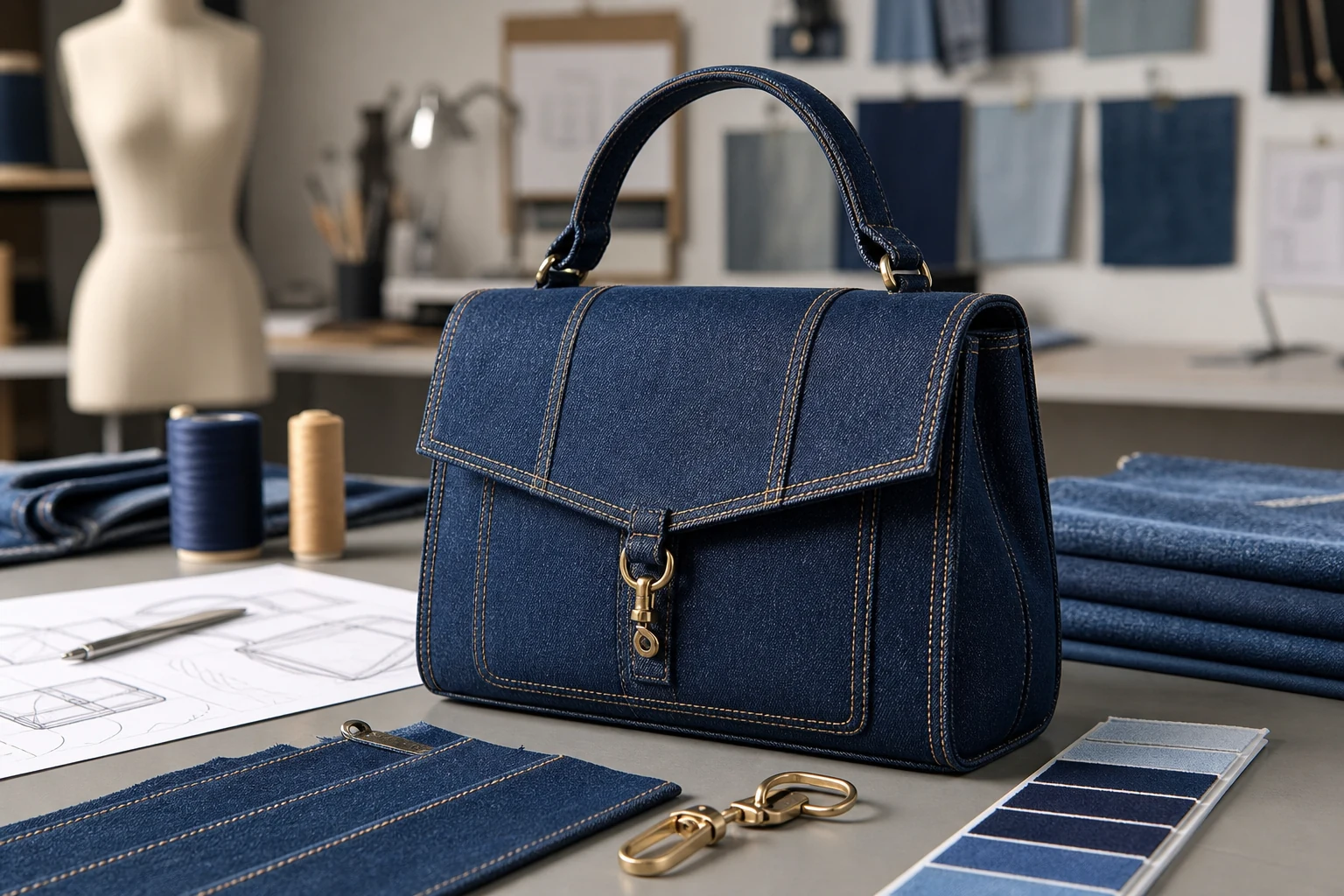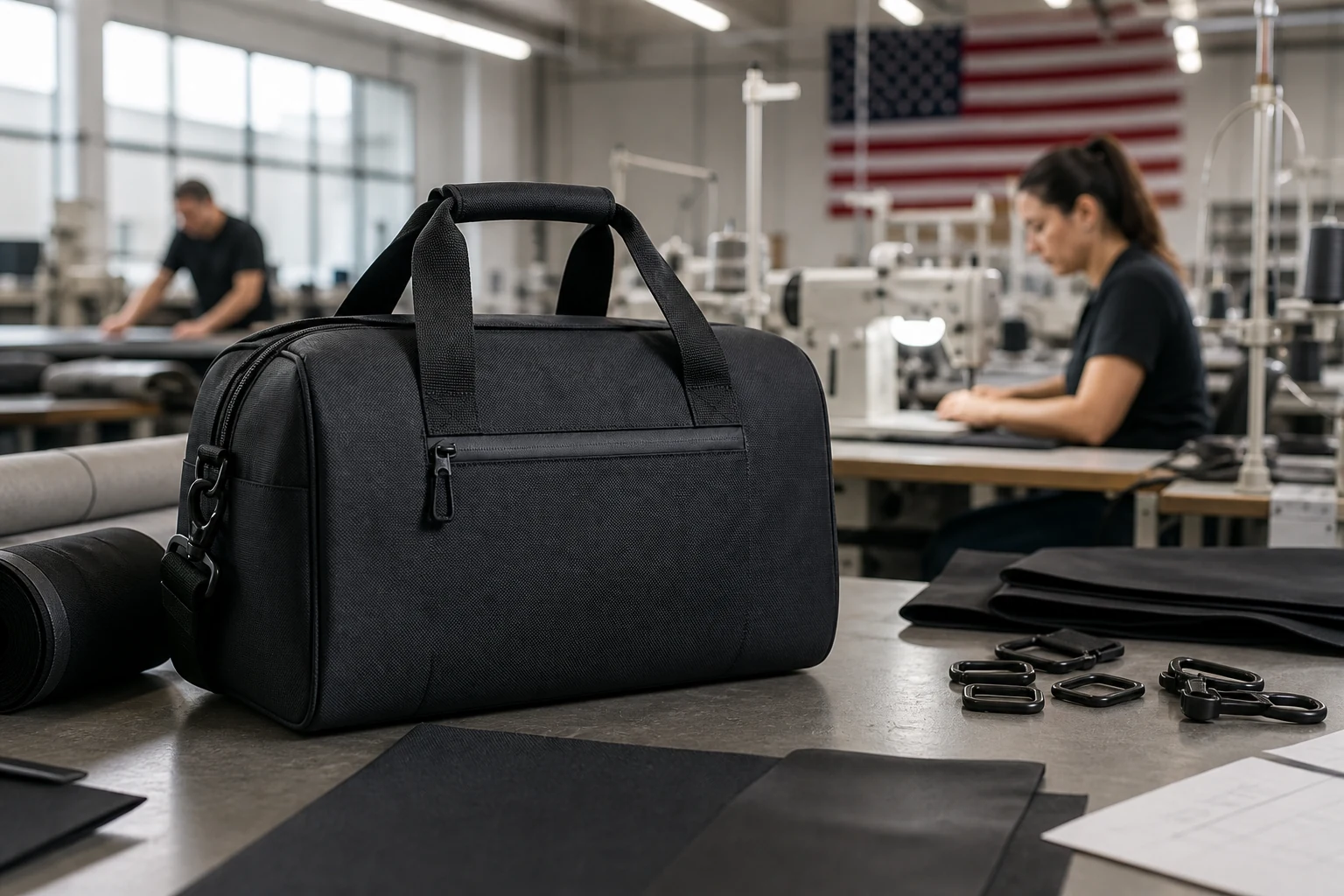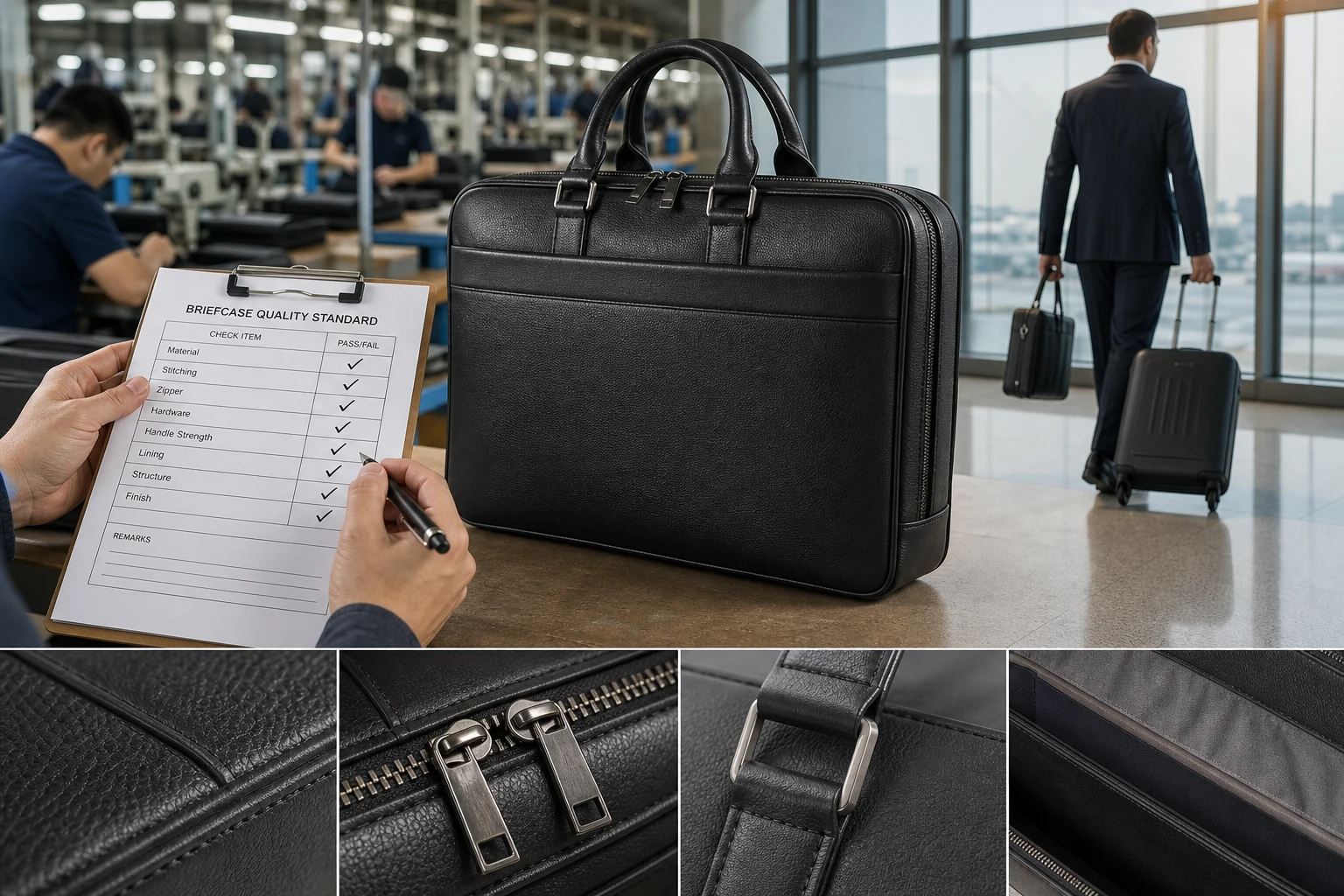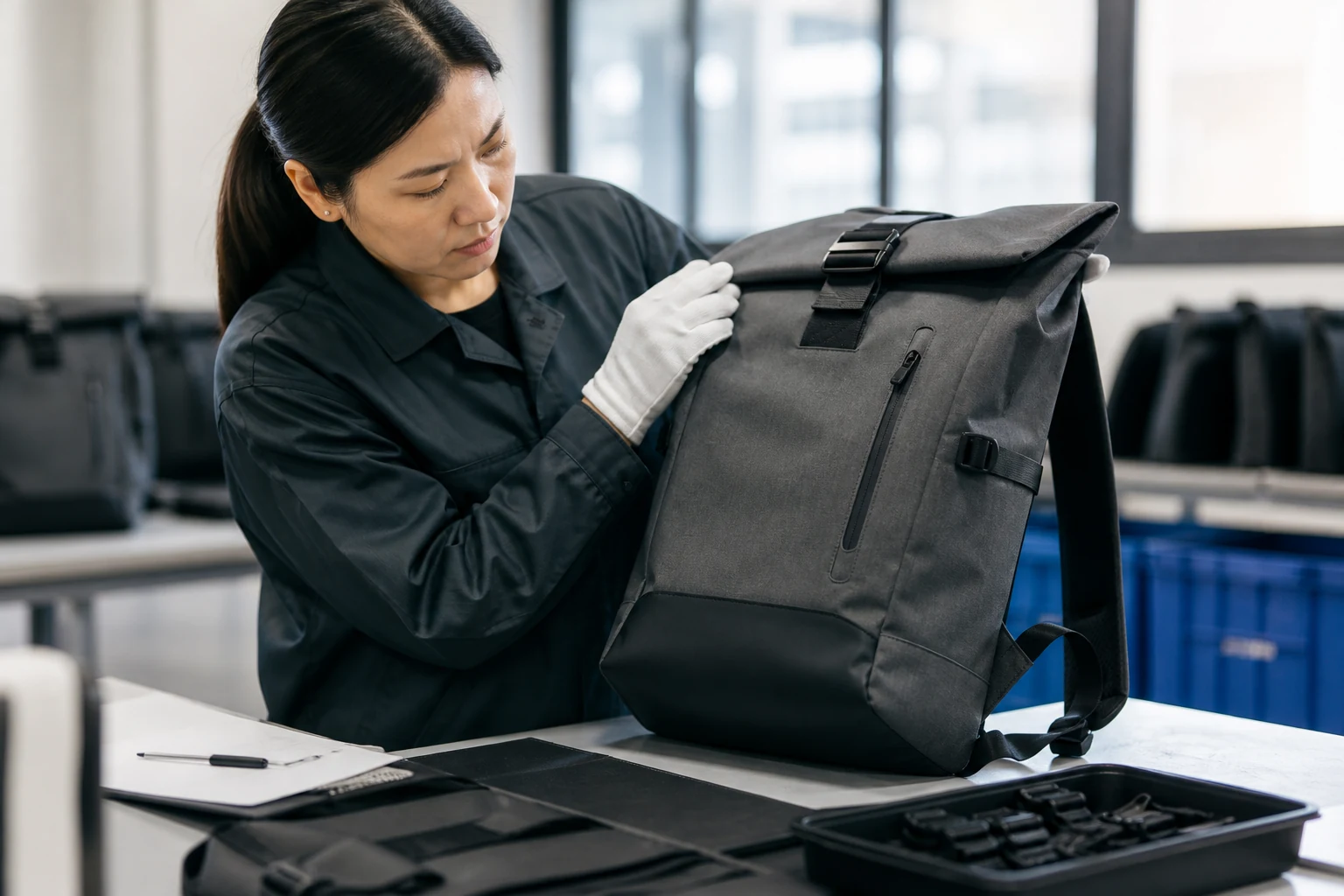
A pre-shipment inspection checks finished goods against the approved sample and purchase specification: stitching and reinforcement, zipper and hardware function, dimensions, logo placement, labeling and packaging. Set the sampling plan and defect classes in the PO, run the inspection while the goods are still at the factory, and record how any failed result will be corrected before shipment approval.
A reliable custom bag quality control inspection is the single biggest factor separating a profitable bag order from a costly return wave. North American brand owners and Amazon sellers lose an estimated 8–15% of margin on bag programs that ship without a structured pre-shipment check, mostly through stitching failures, zipper defects, and dimension drift. This guide breaks down exactly what a buyer should inspect before goods leave a Chinese factory, the industry standards that govern the process, and the documented framework Elandmake has used on every order since 2015.
Custom Bag Quality Control Inspection: Why It Decides Your Margin
A documented quality control process protects three things at once: your landed cost, your marketplace account health, and your brand reputation. A single batch of 1,000 carriers with a 6% zipper failure rate translates into roughly 60 returns, 60 negative customer touchpoints, and — on Amazon — a measurable hit to your order defect rate that can trigger listing suppression. The factories that skip inspection are not actually cheaper once you count rework, air-freight replacements, and chargebacks. A serious custom bag quality control inspection is an investment that pays back on the first order it saves.
The Real Cost of Skipping Inspection
Across pet carrier and backpack programs, the most common rejected defects are broken or misaligned zippers (about 30% of all defects), loose or skipped stitching (25%), incorrect dimensions or webbing length (20%), and color or print deviation (15%). A 300-piece minimum order with a 10% reject rate that ships uninspected costs more in replacements and lost listings than the inspection itself by a factor of 8 to 12. The math is rarely close: the cheapest defect to fix is the one caught on the factory floor, and the most expensive is the one caught by your customer.
Who Carries the Risk
The legal and financial liability for a defective imported bag sits with the importer of record — you — not the overseas factory. That is precisely why a buyer-controlled inspection standard, rather than a supplier's self-assessment, is the only defensible position. Owning the standard is what shifts you from hoping the goods are good to knowing they are.
One clarification of terms before the workflow, because buyers use them interchangeably and factories do not. A bag quality inspection is the check itself — someone opening cartons against a sampling plan. Quality control is the system that decides what that person looks at, what counts as a defect and what happens when one is found. A factory can run inspections and still have no quality control, which is exactly how a shipment passes an inspection and fails at the retailer.
The Pre-Shipment Bag Inspection Workflow Step by Step
A complete inspection happens at three checkpoints, not one. Inline inspection during cutting and sewing catches systemic problems early, a during-production check at 40–60% completion confirms the fix held, and a final random inspection on finished, packed goods is the gate before the balance payment is released. Skipping the first two and relying only on the final check is the single most common buyer mistake, because by then there is no time to rework 1,000 units without missing the ship date.
Sample Size and AQL
Inspectors do not check every unit. They pull a statistical sample defined by ISO 2859-1, the international acceptance sampling standard equivalent to ANSI/ASQ Z1.4. For a 1,000-piece bag order at General Inspection Level II, an AQL of 2.5 for major defects means inspecting 80 random units, with the lot rejected at 6 or more major defects. Agreeing the AQL in writing before production starts is a non-negotiable part of a defensible pre-shipment bag inspection, because an undefined acceptance limit makes every later dispute unwinnable.
What Triggers a Re-Inspection
When a lot fails, the correct outcome is documented 100% rework followed by a fresh random sample — not a renegotiated AQL or a verbal promise. A factory that responds to a failed lot by pushing to "just ship it" has told you everything you need to know about how it will treat every future order.
Industry Standards That Govern Custom Bag Quality Control Inspection
A credible inspection is anchored to recognized standards, not a supplier's internal opinion. The most relevant standards for North American bag buyers are listed below, with the concrete consequence of ignoring each. Treat this custom bag quality control inspection reference as a contractual checklist, not background reading.
| Standard | What It Governs | Consequence of Non-Compliance |
|---|---|---|
| ISO 2859-1 / AQL | Statistical sampling and accept/reject limits | Disputes with no objective basis; failed claims against the factory |
| CPSC (16 CFR 1303) | Lead & phthalate limits in coatings and zippers | U.S. customs seizure, recall, and fines exceeding $100,000 per violation |
| CA Prop 65 | Chemical disclosure for products sold in California | Civil penalties up to $2,500 per item per day plus legal fees |
| ASTM F963 / EN71 | Mechanical & chemical safety where bags are pet or child adjacent | Amazon and retailer delisting; goods refused at port without test reports |
| BSCI | Social compliance audit of the manufacturing facility | Loss of orders from compliance-driven retail buyers |
Why CPSC and Prop 65 Matter for Bags
Buyers often assume chemical regulations only apply to toys. They do not. Zipper pulls, metal hardware, and PU-coated panels are frequent CPSC and Prop 65 trigger points, and an inspection that does not pull samples for accredited lab testing leaves the importer — not the factory — legally exposed at U.S. customs. Elandmake's BSCI & SGS certified process includes documented material sourcing so these tests pass on the first submission. The official compliance scope is published by the U.S. Consumer Product Safety Commission.
The 7-Point Custom Bag Quality Control Inspection Checklist
Every custom bag quality control inspection at our facility runs against a fixed seven-point checklist so results are directly comparable across orders and across factories. Buyers should require the same structure from any supplier they evaluate.
- Workmanship & stitching: stitch density of 8–10 stitches per inch, no skipped or broken threads, reinforced bartacks at every stress point.
- Zippers & hardware: 50-cycle open and close test, auto-lock function verified on pet carriers, no sharp edges on buckles or D-rings.
- Dimensions: length, width, height, and strap length within ±1 cm of the approved golden sample.
- Material & color: fabric weight verified against the spec sheet, color within an agreed Delta-E tolerance under D65 lighting.
- Function test: static load to rated weight, mesh ventilation, water-resistance spray test where specified.
- Labeling & packaging: barcode scannability, care-label accuracy, carton drop test from export height.
- Safety & compliance: retained samples set aside for CPSC, Prop 65, and ASTM lab testing.
How to Evaluate a Supplier's Pre-Shipment Bag Inspection Capability
Before placing a 300-piece order, a buyer should pressure-test how the factory actually runs its quality control rather than trusting a marketing claim. Use the framework below as a structured supplier-evaluation tool during sampling, when switching costs are still low.
Five Questions Every Buyer Should Ask
- Who inspects? A dedicated QC team independent of the production line, or the same workers grading their own output?
- Against what? A written AQL and an approved golden sample, or a verbal "looks fine"?
- What documentation? A photo-backed report with counted defects by category, or a one-line pass note?
- Third-party access? Will they accept an independent inspector such as SGS, Intertek, or QIMA at your cost without resistance?
- What happens on failure? Documented rework and re-inspection before the balance, or pressure to accept marginal goods?
A factory that answers all five cleanly is rarer than buyers expect. Elandmake provides a photo-documented report on every pre-shipment bag inspection and welcomes third-party inspectors, because a 24-hour response on a defect is cheaper than a returned container and a suspended listing.
Common Pre-Shipment Bag Inspection Mistakes Buyers Make
Even experienced importers weaken their own results through avoidable errors. The three below account for most of the field failures we see on incoming bag programs.
Mistake 1: No Approved Golden Sample
Inspecting against a written description instead of a physically approved, sealed reference sample makes every defect arguable. The fix costs nothing: approve and retain a signed golden sample before bulk production begins.
Mistake 2: Inspecting Too Late
A final-only check on 1,000 finished bags leaves no time to rework without blowing the ship date, which quietly pressures buyers into accepting borderline goods. A during-production check at 50% completion removes that trap entirely.
Mistake 3: Ignoring Packaging
A flawless bag inside a carton that fails a drop test still arrives damaged and still generates a return. Packaging integrity and carton drop testing are part of a complete pre-shipment bag inspection, not an optional afterthought.
Elandmake's Quality Control Standards and Process
Our process is built around three documented checkpoints, ISO 2859-1 sampling, and the fixed seven-point checklist applied to every order without exception. As a custom bag manufacturer serving North American buyers, Elandmake is a Jinhua-based factory making bags since 2015, with 10+ years of experience, BSCI & SGS certified, working in Nylon, Polyester, Oxford Cloth, PU leather, and Canvas. Our MOQ is 300 pieces, samples take 3–7 business days, and bulk production runs 15–30 days for light customization or 20–45 days for heavy customization, with inspection time built into that window rather than bolted on at the end. You can review our pet carrier construction on the pet backpack product page or browse the broader dog outing bag category.
Ready to Source Bags with Real Inspection Behind Them?
A documented custom bag quality control inspection is what turns a sample you liked into 300 units you can sell without a return spike or a compliance scare. The cost of getting it right is a fraction of one rejected container, and it is the line between a real supplier relationship and a one-time gamble on goods you have never seen.
Ready to source your custom bags? Contact Elandmake for a free factory quote — our team responds within 24 hours.