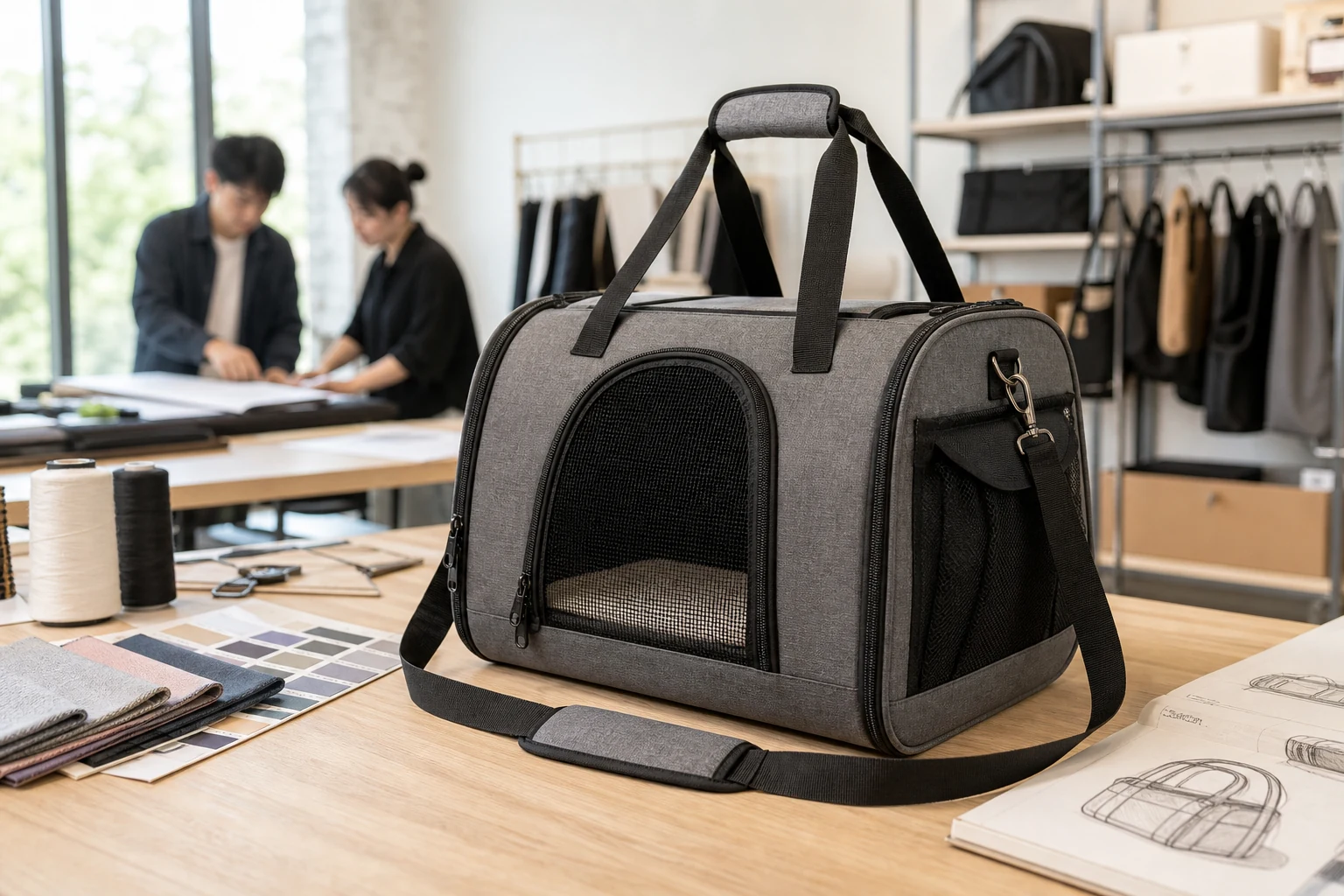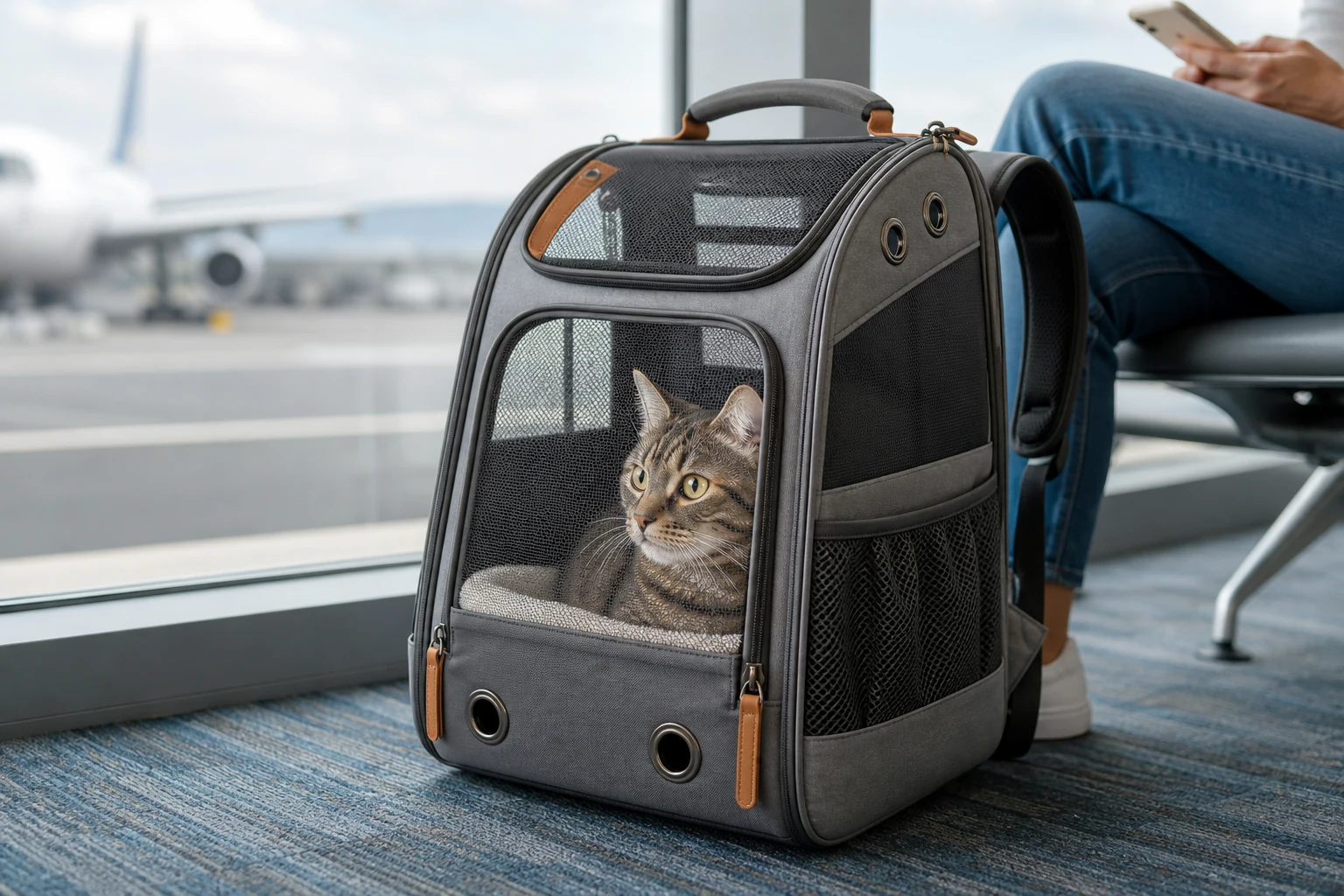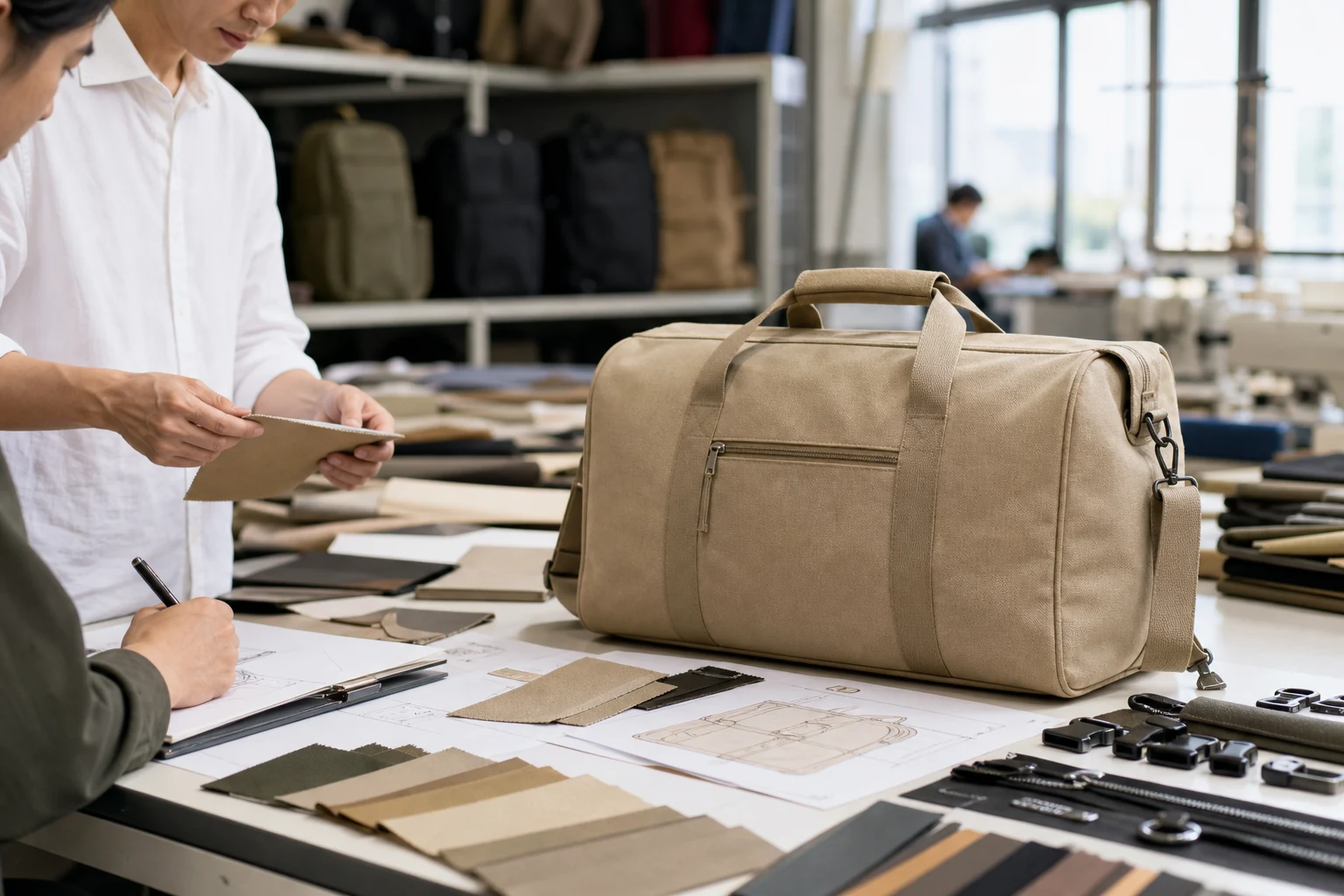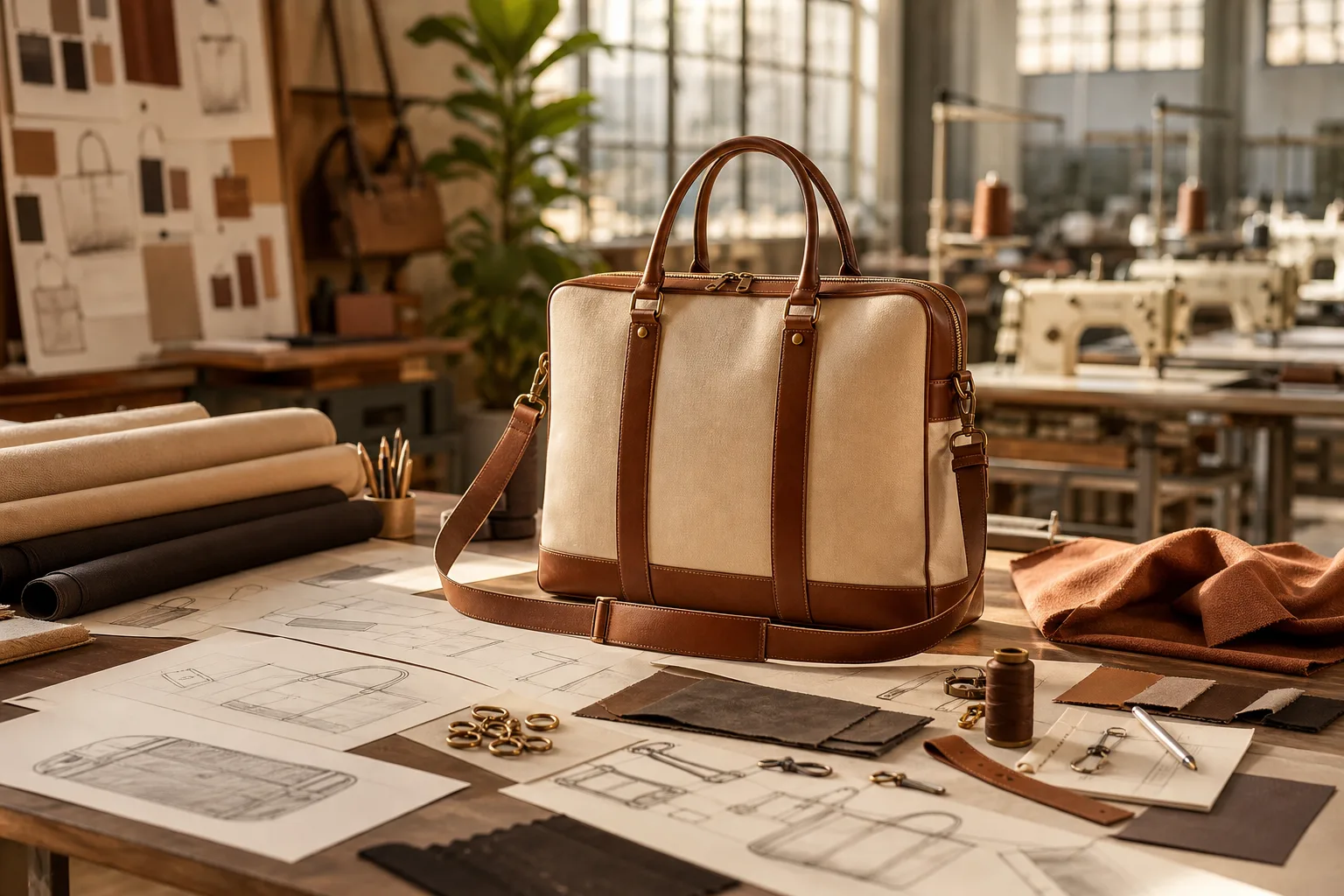
A custom bag goes through seven stages: tech pack, material sourcing, pattern making and sampling, bulk cutting, stitching and assembly, quality control, then packing and logistics. The approved sample becomes the reference for production and inspection. Elandmake's standard timing is 3-7 days for sampling, 15-30 days for light-customization production, and 20-45 days for heavy customization.
Knowing how your product is actually built is how you keep quality and cost under control. For B2B buyers, the bag manufacturing process step by step can look complicated at first, but an experienced factory takes most of the guesswork out of it. Elandmake's production team has been making bags since 2015, and we bring 10+ years of hands-on manufacturing to each project, turning a design into a retail-ready bag without the usual back-and-forth.
Whether you are ordering high-performance outdoor backpacks or a specialized pet dog cat backpack, the workflow stays the same: precision first, quality control at every stage. Below is the exact 7-step process our BSCI & SGS certified factory follows to bring a custom bag to life.
At a Glance: The Seven Stages
| Stage | What happens | What you approve |
|---|---|---|
| 1. Tech pack | Dimensions, materials, hardware, logo placement | The written spec everything is built against |
| 2. Material sourcing | Fabric, lining, zippers and hardware secured | Lab dips and material swatches |
| 3. Pattern & sampling | Pattern cut, prototype sewn, 3–7 days per round | The golden sample — the standard for the whole order |
| 4. Bulk cutting | Precision cutters or die-cutting to the approved pattern | — |
| 5. Stitching & assembly | Assembly lines, reinforced cross-stitching at stress points | — |
| 6. Quality control | Inline checks plus final AQL inspection | Inspection report before balance payment |
| 7. Packing & logistics | Stuffing, desiccant, export cartons, FBA prep | Packaging and labelling spec |
Typical timing: samples in 3–7 days, bulk production in 15–30 days for light customization or 20–45 days for heavy customization, MOQ from 300 pieces.
bag manufacturing process step by step Explained: The Basics
The bag manufacturing process step by step starts well before any fabric is cut. It begins with your Tech Pack (Technical Package), the blueprint for the whole build. A good Tech Pack spells out dimensions, materials, color Pantone codes, hardware specs, and logo placements.
In Step 1 (Design & Engineering), our R&D team reviews that Tech Pack. If you don't have one yet, our in-house designers can turn your sketches or reference photos into professional 3D CAD models and 2D paper patterns. This first step catches structural problems early, like a weak load-bearing seam, so they get fixed on paper instead of after you've paid for materials.
Material Sourcing for the bag manufacturing process step by step
Step 2 is Material Sourcing, and it decides how the finished bag holds up in the field. At Elandmake we keep a steady supply chain for the main textiles: Nylon, Polyester, Oxford Cloth, PU Leather, and Canvas. If you are weighing fabric options, our nylon vs polyester bag material comparison breaks down the trade-offs for weight, abrasion, and cost.
We source fabric by the denier you need (for example 600D or 1000D) plus any treatment like a water-repellent (DWR) coating or UV resistance. Then we procure the hardware: zippers, buckles, D-rings, and magnetic snaps. Ten-plus years of local supplier relationships in Jinhua let us lock in solid components at competitive prices and pass the savings to you, while keeping the bill of materials in line with SGS quality testing standards.
Sampling: The Most Critical bag manufacturing process step by step
Step 3 is Prototyping and Sampling. Never move to bulk production without a physical sample you have signed off on. This is the stage in the bag manufacturing process step by step where the paper pattern becomes a bag you can hold, load, and stress-test.
Because we run a dedicated sample room, our sample turnaround is a fast 3–7 days. We cut the fabric, stitch the prototype, and apply your logo (embroidery or silk screen), then express-ship it to you. You test it, wear it, load it with weight, and send feedback. We refine the sample until it is fully approved for mass production. For the detail on revisions and cost, see our custom bag sampling process guide.
From Cutting to Assembly: The Core bag manufacturing process step by step
Steps 4 and 5 are the physical bulk build. Once the sample is approved and the 30% T/T deposit is in, we start production at an accessible MOQ of 300 pieces.
- Step 4: Bulk Cutting. We use precision laser cutters and hydraulic die-cutting machines to cut hundreds of fabric layers at once, holding tight to your approved pattern with minimal deviation.
- Step 5: Stitching & Assembly. The cut panels move to the assembly lines, where our operators run heavy-duty industrial sewing machines. We add reinforced cross-stitching (X-box stitching) at the stress points, such as shoulder-strap attachments, so the bag carries load and comes back far less often as a return.
Quality Control and Shipping in the bag manufacturing process step by step
Steps 6 and 7 protect your money. Step 6 is Quality Control (QC). As a BSCI-certified factory, we hold the line on ethical labor and on output. Our QC team inspects inline during stitching and runs a full final inspection against AQL sampling levels, checking loose threads, zipper smoothness, and dimensional accuracy. If you want the checklist we work from, read our custom bag quality control inspection process.
Step 7 is Packaging and Logistics. Bags are stuffed to hold their shape, packed with desiccant to fight moisture during sea freight, and loaded into durable double-corrugated export cartons ready for palletizing or FBA prep. Our bulk lead time typically runs 15–30 days for light customization or 20–45 days for heavy customization, which gives you a predictable window for Q3 and Q4 inventory planning.
Ready to source your custom products?
Contact Elandmake for a free factory quote
— our team responds within 24 hours.