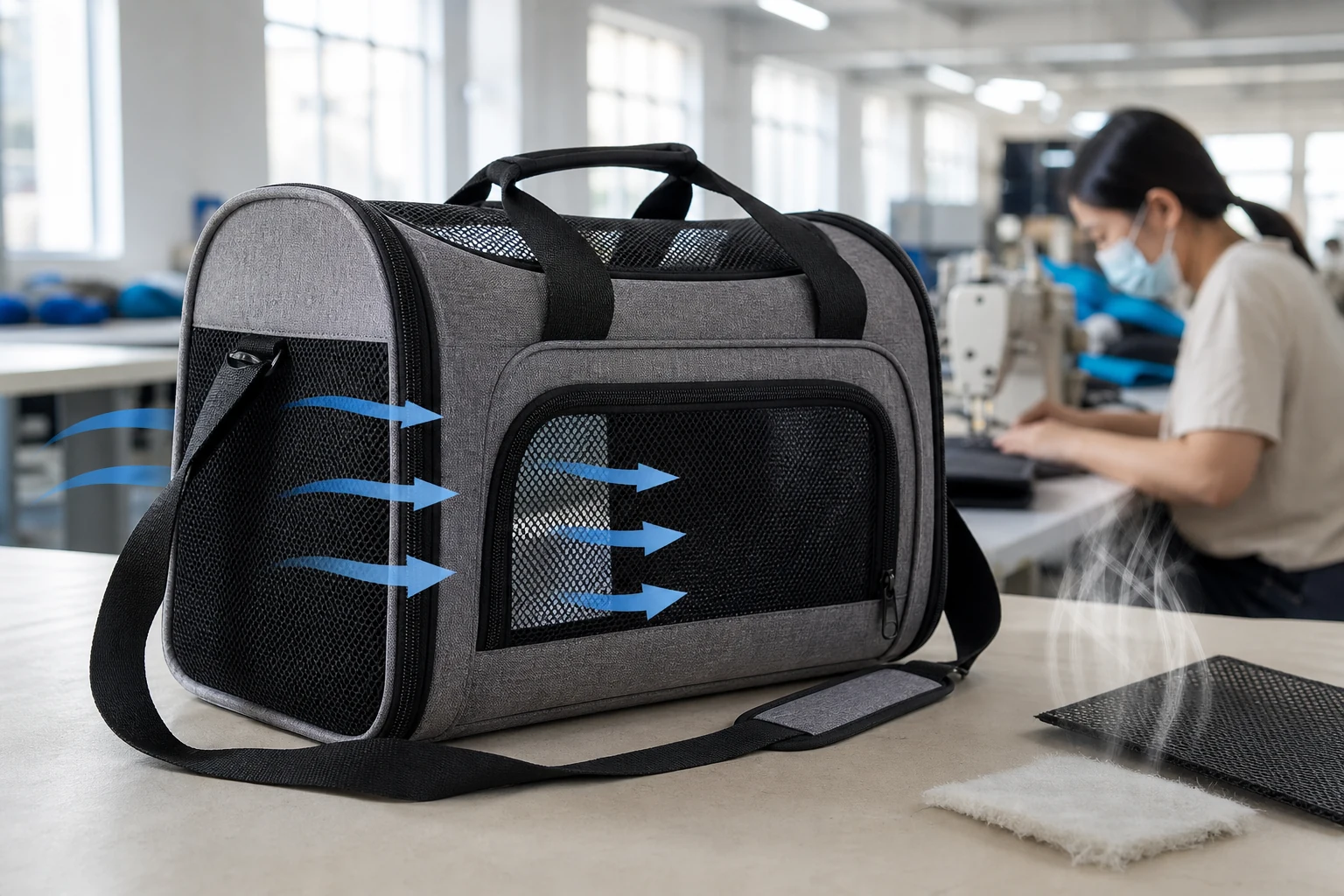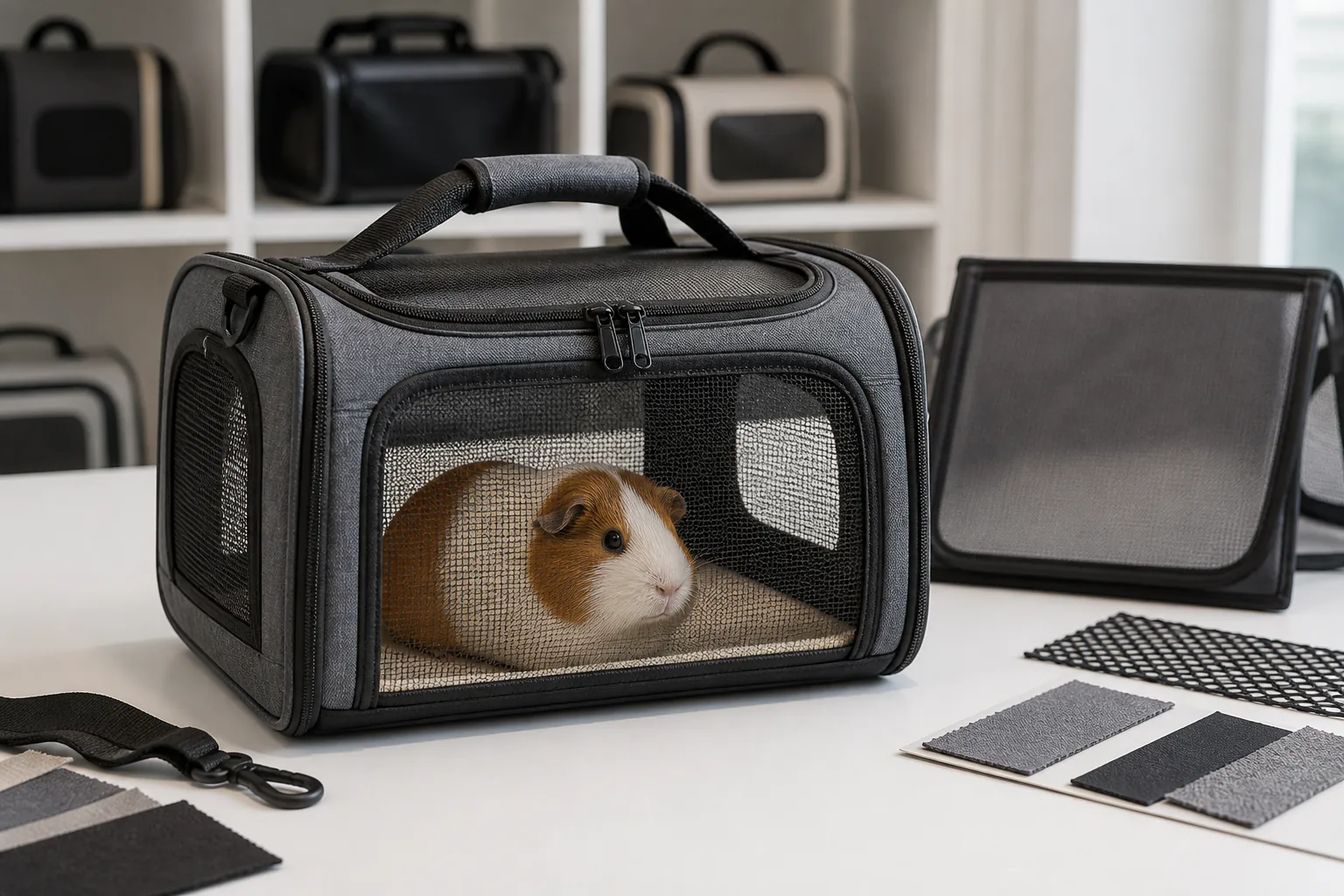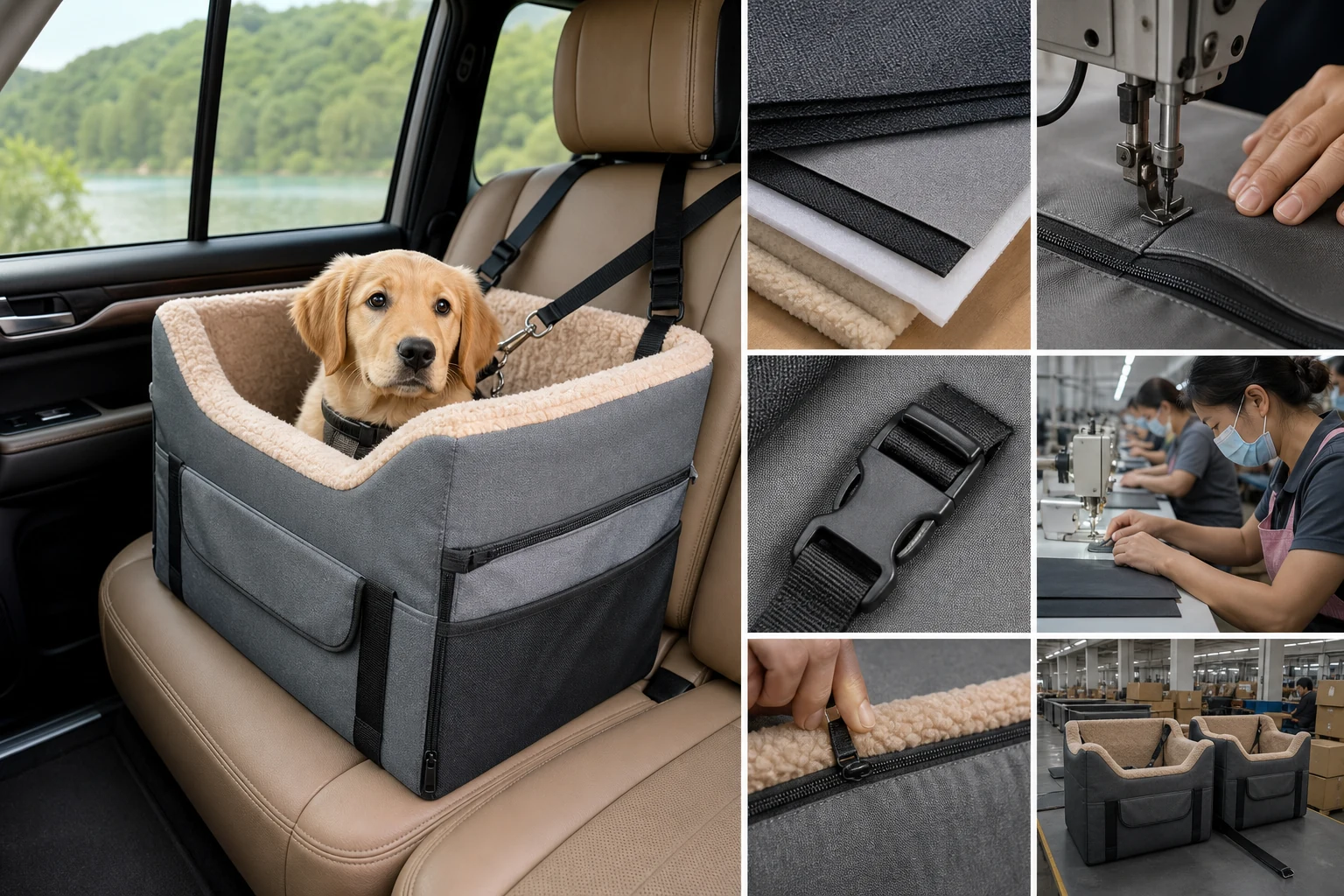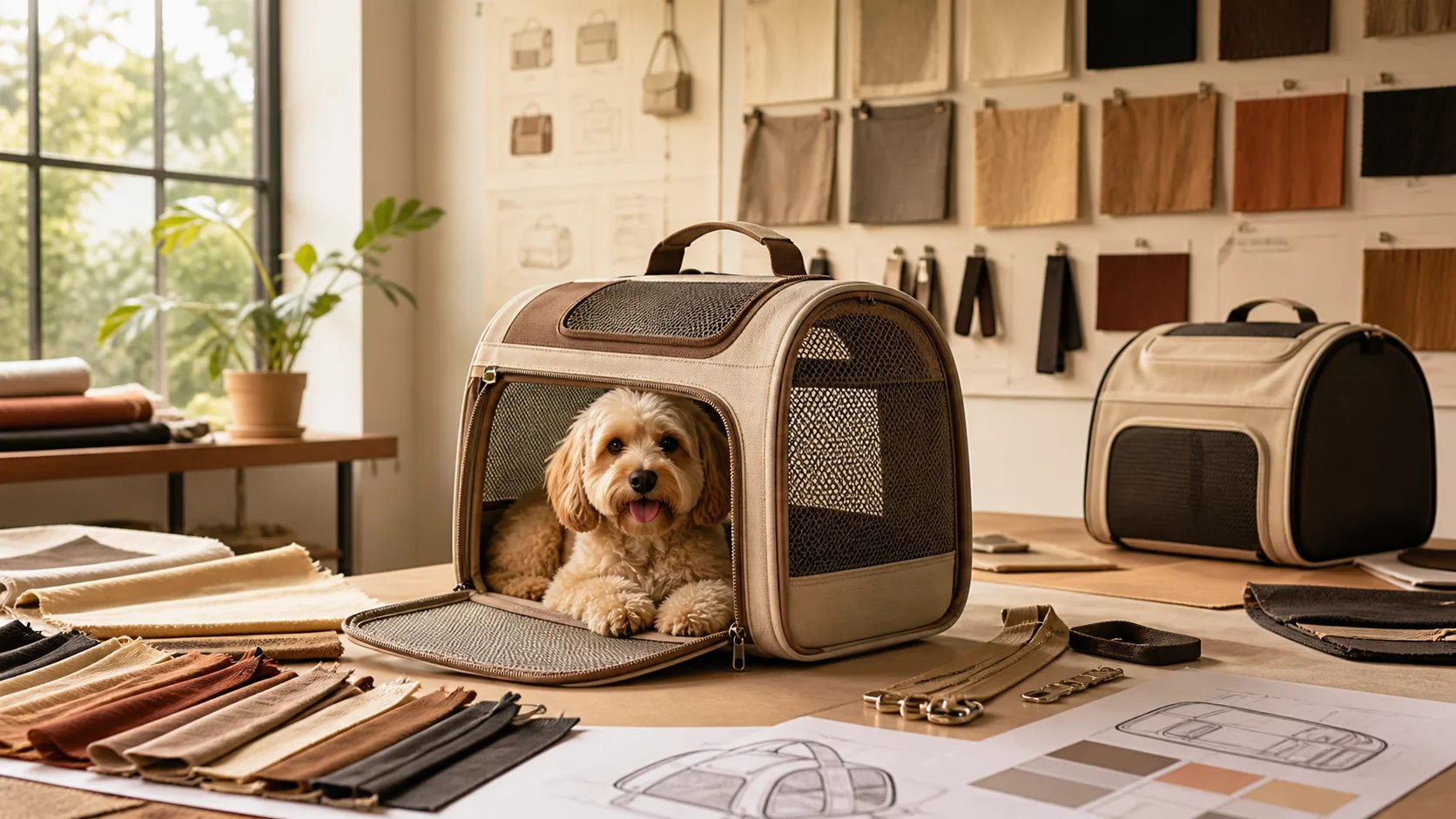
Mesh panels maximise airflow, which matters for summer travel, heat-stress returns and airline acceptance; solid panels give structure, privacy and a cleaner surface for branding. The usual answer is not one or the other but mesh on at least two faces plus a rigid floor, so the animal gets cross-ventilation without the carrier collapsing. Specify mesh density along with placement - open weave moves more air, tighter weave resists claws.
Breathable pet carrier mesh ventilation is what separates a summer SKU that earns repeat orders from one buried under heat-stress returns. For B2B buyers sourcing pet bags from China, the choice between airflow-first mesh construction and enclosed solid panels affects animal safety, airline acceptance, return rates, and your margin. This guide breaks down the engineering, the regulatory standards, the material specs, and the supplier-evaluation framework you need before placing a 300-piece order with any factory.
Breathable Pet Carrier Mesh Ventilation Explained: What B2B Buyers Need to Know
Breathable pet carrier mesh ventilation comes down to moving warm, humid air out of the enclosure faster than the animal's body puts it in. Dogs and cats cannot sweat through their skin the way humans do; they regulate temperature almost entirely through panting, which loads the interior air with heat and moisture within minutes of the bag being zipped shut. A carrier with poor airflow can climb 8 to 12 degrees Celsius above ambient temperature in under 20 minutes of summer transit, pushing a pet toward genuine heat stress and, in extreme cases, heatstroke. Mesh panels solve this by exposing 30 to 60 percent of the carrier surface to free air exchange, letting convection carry hot air out as the animal moves.
Why Summer SKUs Live or Die on Airflow
North American buyers consistently report return-rate spikes of 15 to 25 percent on under-ventilated carriers sold between May and September. The complaint pattern barely changes from one season to the next: panting, drooling, the pet refusing to enter the bag a second time, and one-star reviews citing a hot box. For Amazon FBA sellers especially, a cluster of heat complaints in July can suppress a listing for the rest of the peak season. A well-engineered carrier fixes the problem at the material level, long before it reaches the customer, rather than leaning on marketing copy the product cannot back up.
Mesh vs Solid Panels: The Core Engineering Trade-Off
Solid panels, typically 600D to 1680D polyester or PU-coated Oxford fabric, deliver structure, water resistance, and a premium boxy look that photographs well. Mesh panels deliver airflow but sacrifice rigidity and rain protection. In practice, most professional-grade carriers are hybrids: a structural solid base and frame combined with breathable panels across the upper third and both long sides. Getting that ratio right is where supplier expertise matters most. The table below compares the two construction philosophies against the metrics buyers actually track on a profit-and-loss sheet.
| Metric | Breathable Mesh Panels | Solid Panels |
|---|---|---|
| Airflow / heat dissipation | High (30-60% open area) | Low (small vents only) |
| Interior temp rise (20 min, summer) | +2-4 deg C | +8-12 deg C |
| Water resistance | Low to moderate | High |
| Structural rigidity | Requires internal frame | Self-supporting |
| Summer return rate (typical) | 3-7% | 15-25% |
| Weight | Lighter | Heavier |
| Best season | Spring-Summer | Fall-Winter |
The Hybrid Sweet Spot
For a year-round catalog, the strongest design keeps a solid, wipe-clean base and a rigid frame while opening the sides and top to airflow. This protects the animal from puddles and dirt at the bottom, the area most exposed to moisture, while letting heat escape upward in the direction it naturally travels. Buyers who specify this hybrid configuration typically see the lowest combined return rate across both summer and shoulder seasons, and they avoid carrying two separate seasonal SKUs. It is the layout we recommend most often on our custom mesh pet carrier factory builds.
Industry Standards Governing Breathable Pet Carrier Mesh Ventilation
Airflow is not only a comfort feature; for air travel it is part of the applicable container requirement and airline acceptance check. The 2026 IATA Container Requirement 1 distinguishes construction routes and includes state and operator variations, so there is no single "three sides" shortcut that covers every cabin and cargo use. Define the route, animal, mesh opening size, usable open area, placement, attachment and any obstruction from pockets or under-seat compression, then map the sample against the current IATA and airline requirements.
Beyond IATA: Material Safety Standards
The mesh fabric and coatings must be evaluated against the finished product's intended market and claim scope. BSCI documentation addresses social compliance and Elandmake's SGS record is a factory audit; neither proves the chemistry or performance of a particular mesh. When the importer, retailer or applicable rule requires product-level evidence, scope a separate declaration or laboratory report to the actual material and SKU.
Key Specifications: Mesh Type, Density and Performance
Not all mesh is created equal, and the differences are invisible in a product photo. The right breathable pet carrier mesh ventilation material starts with 3D air mesh, also called spacer fabric, the premium choice for summer carriers because its 4 to 8mm loft physically holds the fabric off the animal's body. That gap preserves airflow even when a 7kg dog leans its full weight against the wall, the exact moment cheaper mesh collapses and stops breathing. Flat polyester mesh costs less per meter but offers little of this resilience. Naming the correct grade at the quote stage prevents the costly mid-production substitutions that erode both quality and trust.
| Mesh Type | Loft / Thickness | Airflow Rating | Typical Use |
|---|---|---|---|
| 3D spacer air mesh | 4-8 mm | Excellent | Premium summer carriers |
| Sandwich mesh | 2-3 mm | Good | Mid-tier carriers |
| Flat tricot mesh | 0.5-1 mm | Moderate | Window panels only |
| Hex / diamond net | under 0.5 mm | High but fragile | Visibility windows |
The Elandmake material library of Nylon, Polyester, Oxford Cloth, PU leather and Canvas pairs naturally with 3D spacer mesh, letting a single carrier combine a durable structural shell with high-airflow side panels in one clean build.
How to Evaluate a Breathable Pet Carrier Mesh Ventilation Supplier
A disciplined buyer's framework for vetting a mesh carrier factory weighs four dimensions, each scored before any deposit changes hands. Treating this as a written checklist rather than a gut feeling is what separates buyers who reorder profitably from those who spend the season chasing refunds.
- Certification depth: Confirm the BSCI and SGS documents are current and tied to the actual production site, not borrowed from a trading-company front that subcontracts the real work elsewhere.
- Mesh sourcing transparency: Ask exactly which mesh type and yarn supplier the factory uses, and request a material spec sheet with airflow data attached.
- Sampling discipline: A factory offering 3 to 7 day samples lets you physically test real airflow and seam strength before committing to a bulk run.
- QC protocol: Verify they inspect the mesh-to-panel seam strength under load, since seam blowouts at the mesh junction are the single most common field failure.
Elandmake, a BSCI and SGS certified manufacturer whose team has been making bags since 2015, with 10+ years of experience, designs airflow into its core pet backpack line using 3D spacer mesh and double-reinforced seams rated for repeated load cycles.
Common Sourcing Mistakes with Mesh Carriers
Three errors cost buyers the most money, and all three are avoidable. First, specifying mesh by appearance rather than airflow data: a tight, decorative-looking mesh may actually breathe worse than an open spacer fabric, so the eye is a poor judge. Second, ignoring seam reinforcement, which is responsible for roughly 60 percent of field failures when a pet pushes against a panel. Third, ordering solid-heavy carriers for summer SKUs to save a few cents per unit, then absorbing a return wave that wipes out those savings many times over. A proper sample round and a written material spec eliminate all three before they reach production.
Step-by-Step: Sourcing Summer Mesh Carriers from China
The workflow is straightforward when you move in the right order. Request a quote with your target mesh type, color, and quantity; Elandmake responds within 24 hours. Approve a sample within the 3 to 7 day window and physically test airflow, seam strength, and zipper durability rather than judging by photos. Confirm bulk terms next, where MOQ starts at 300 pieces with a 30 percent deposit and a 15–30 day production schedule. Finally, inspect against an AQL 2.5 standard before releasing the 70 percent balance for shipment. For a fuller walkthrough of documents, deposits, and inspections, see our guide on how to source custom pet bags from China. You can also browse current configurations on the dog outing bag category page.
Why Mesh Construction Protects Your Margin
Ventilation should be settled at the specification and sample stage because changing mesh placement after tooling and panel cutting creates avoidable rework. For B2B buyers planning summer inventory, document the airflow and escape-resistance checks instead of relying on an unsupported return-rate promise. The governing references remain the current IATA CR1 and the operating airline's policy.
Ready to source your custom summer pet carriers? Contact Elandmake for a free factory quote — our team responds within 24 hours.