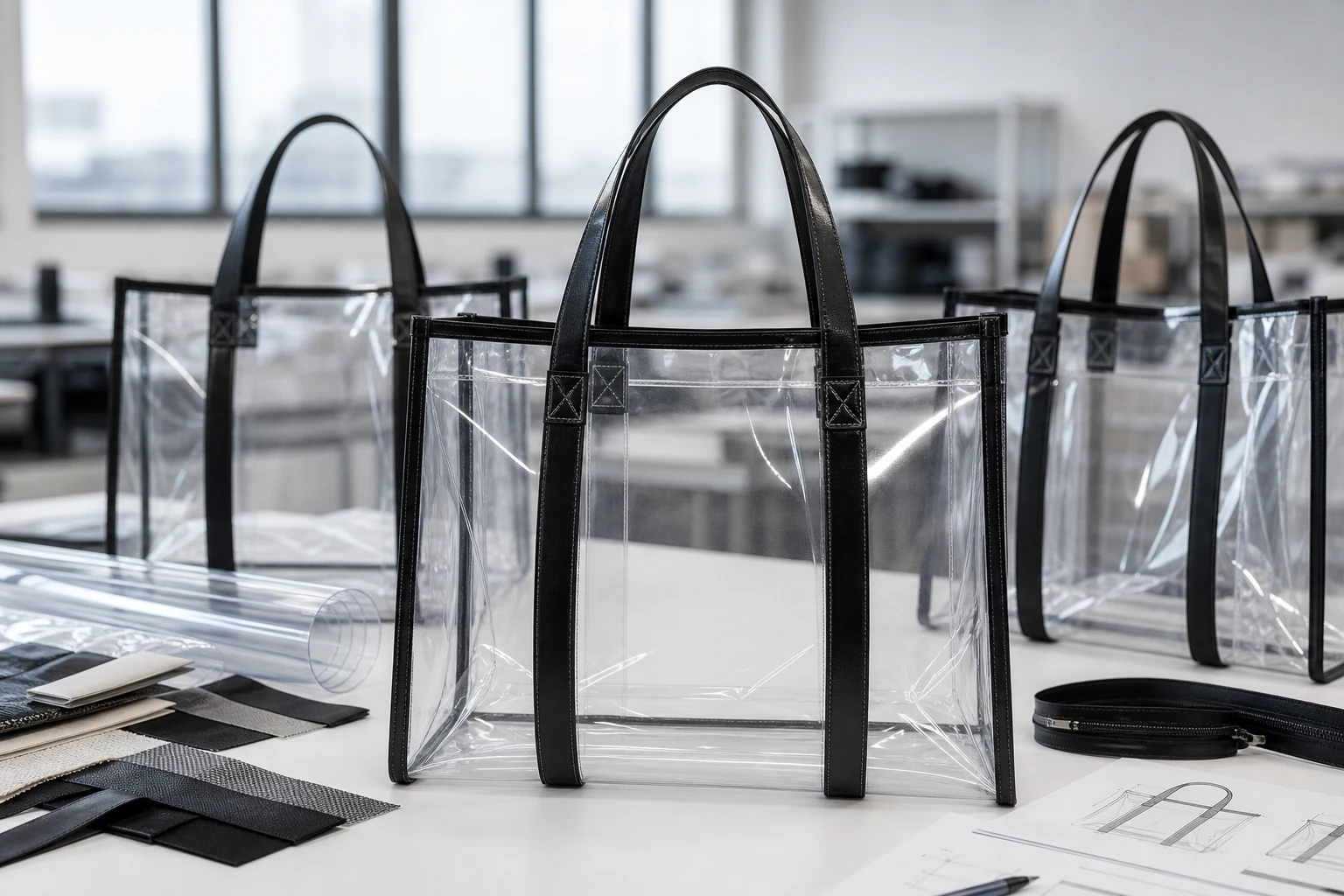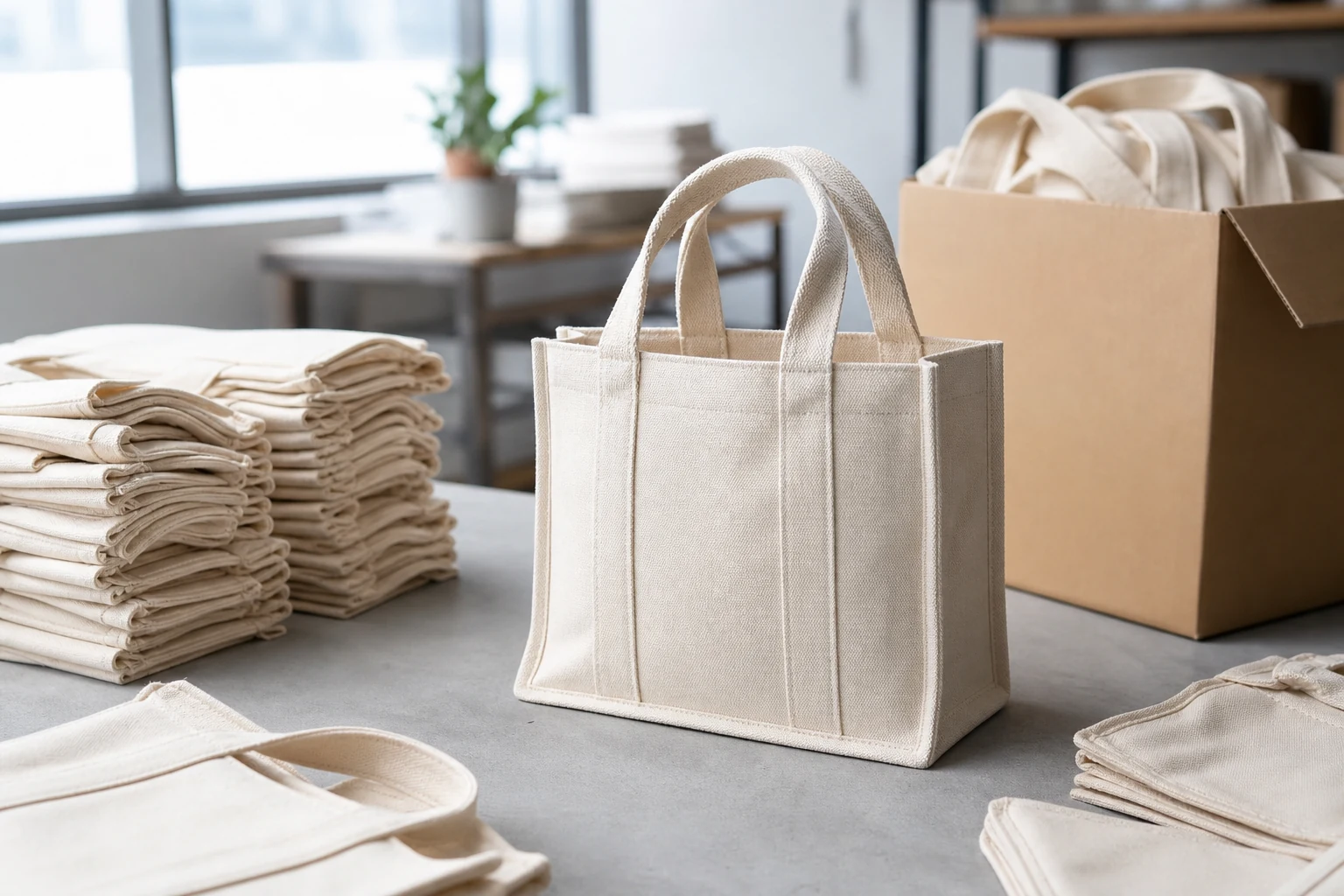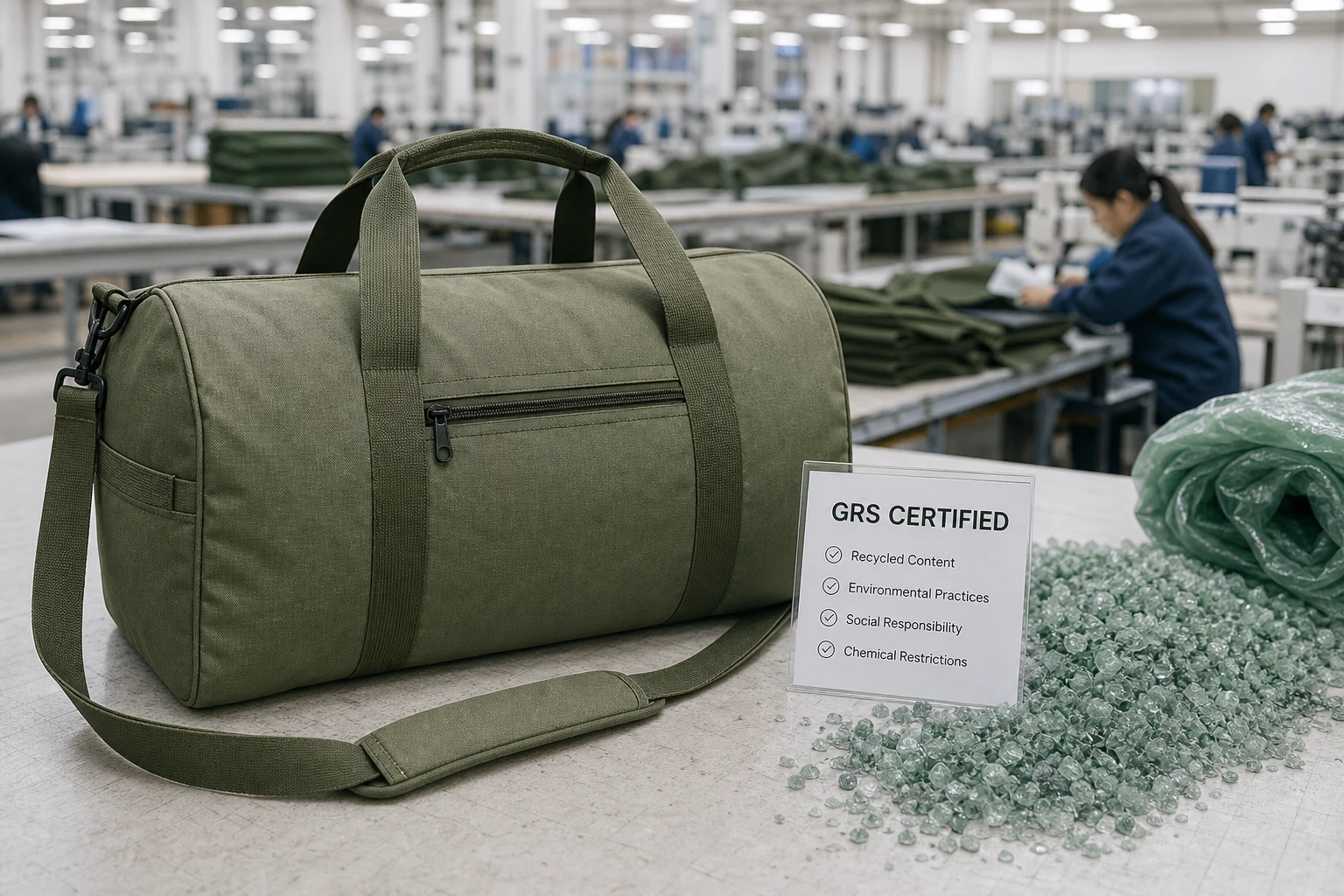
Choosing an RPET bag manufacturer who can produce real GRS paperwork is now a procurement requirement, not a branding extra. Sustainable bag lines make up a growing share of volume in many retail programs, and buyers increasingly won't shelve a product without documented recycled content. At the same time, regulators in the US and EU are moving against unverified green claims. The economics have caught up too: the RPET cost premium has narrowed to under 10% versus virgin polyester at wholesale volume, so price no longer fights the sustainability case. What matters is simple — real recycled material backed by real certificates. Here is how to source it.
What RPET Actually Is — and Why Verification Matters
Recycled polyethylene terephthalate (RPET) is yarn spun from cleaned, crushed, and melted post-consumer plastic bottles. Functionally, a 600D RPET Oxford behaves nearly identically to its virgin equivalent: similar abrasion resistance, similar colorfastness, marginally different hand feel in some weaves. That similarity is the problem. Nothing about a finished bag visually proves recycled content, so the entire value of your sustainability claim rests on the paper trail. That makes certification the first question, not the last.
The Certificates That Count
| Certificate | What It Verifies | What to Check |
|---|---|---|
| GRS (Global Recycled Standard) | Recycled content + chain of custody | Transaction certificate for your specific order |
| OEKO-TEX Standard 100 | Finished material free of harmful substances | Valid certificate number, current year |
| BSCI | Factory social compliance | Audit tied to actual production site |
| SGS lab reports | Physical & chemical performance | Report covers your fabric lot |
The detail most buyers miss: GRS works on transaction certificates, meaning each order's recycled content is documented through the supply chain. A factory waving a generic GRS logo without producing a transaction certificate for your PO is selling you a story. Verify scope at the Textile Exchange standard page, and pair it with the factory-level diligence we describe in our BSCI certified bag factory guide.
Where Our Certification Actually Sits
We hold this to the same standard we just asked you to apply to us, so here is the exact position. The GRS scope certificate sits with the mill that weaves the fabric, not with our cut-and-sew factory — which is how the standard normally works in this supply chain. What we do is buy from GRS-certified mills, keep the recycled fabric on a segregated lot, and pass the mill's transaction certificate for your specific PO through to you along with the shipment documents. That is what backs your recycled-content claim.
What that means in practice: your fabric is certified and documented, and you get the paperwork to prove it. What it does not mean is that the finished bag carries its own GRS certification from our facility — no bag maker can claim that without being inside a certified chain of custody itself. If your retail program requires GRS certification on the finished product rather than the material, tell us at the RFQ stage; that is a different production route and we will say so up front rather than sending you a mill certificate and hoping it passes.
RPET vs Virgin Polyester: The Honest Comparison
RPET's performance penalty is small and shrinking as fiber quality improves: slightly higher yarn-breakage rates in weaving (reflected in price, not durability), color consistency that needs tighter dye-lot management, and a modest cost premium that falls below 10% at 600D in wholesale quantities. Against that, you get a verifiable sustainability claim, eligibility for retail programs that now require recycled content, and a roughly 60% lower energy footprint in fiber production. For the baseline fabric physics, our nylon vs polyester comparison applies unchanged to the recycled variants.
Which Formats We Run in RPET
Most of the sourcing enquiries that reach us are not for "an RPET bag" in general. They are for a specific format, and the search terms show it: buyers look for an RPET backpack manufacturer or an RPET backpack supplier far more often than for anything else, with RPET handbag and pouch programs behind that.
Backpacks are the easiest format to switch, which is why they usually go first. A recycled 600D or 900D shell behaves close enough to its virgin equivalent that the pattern, the padding and the hardware carry over unchanged — the development work is in the fabric approval and the paperwork, not in the bag. As an OEM RPET bag manufacturer that means a backpack already in your range can often be re-run in recycled fabric against the existing tech pack, with sampling to confirm hand-feel and colour rather than to redevelop the structure. Totes, pouches and handbags follow the same route; the constraint is the mill's available colours in a certified lot, not our floor.
What does not change is the verification. An RPET bag factory that cannot hand you a transaction certificate for your purchase order is selling the same story whatever format it is printed on.
Where RPET Fits in Your Catalog First
Start where sustainability messaging converts hardest. Tote and shopper bags are the category consumers most associate with reuse — our reusable grocery tote is the platform most first RPET orders start from, since the pattern is already proven and only the fabric changes. Cosmetic pouches suit brands with clean-beauty positioning. School and everyday backpacks work well where parent purchasing skews eco-conscious. And pet carriers land with a demographic that overlaps heavily with sustainability-driven buyers. A staged rollout also simplifies QC: one fabric platform, several silhouettes, one set of certificates.
Production Notes from the Factory Floor
RPET runs need two disciplines beyond standard production. First, dye-lot control: recycled feedstock varies more than virgin, so lock color standards with lab dips before bulk. Second, claim hygiene: print "made with X% recycled polyester" only at the verified percentage on the transaction certificate. Overstating content is the exact greenwashing pattern regulators are penalizing. Hardware and construction stay the same as any premium program — YKK zippers, bar-tacked stress points, and in-line AQL checks during sewing. A factory running certified QC, as outlined in our bag quality control inspection guide, handles both as routine.
Sourcing Checklist for Your First RPET Order
Request the GRS transaction certificate mechanism in writing before sampling. Approve lab dips against Pantone standards. Sample in 3–7 days and test exactly as you would virgin fabric: seams, zippers, and load. Confirm OEKO-TEX coverage of the finished material. Set the claim language for your packaging from the certificate, not the marketing deck. After sample sign-off, plan 15–30 days for light customization or 20–45 days for heavy customization, and lock your private-label details (labels, hangtags, packaging) before the line runs. Elandmake is BSCI and SGS certified, founded 2015, and offers RPET options across its Nylon, Polyester, Oxford, PU and Canvas material library with MOQ from 300 pieces per style and colorway — a threshold that keeps a certified sustainable line workable for mid-size brands.
Ready to launch a certified sustainable bag line? Contact Elandmake for a free factory quote — our team responds within 24 hours.